How Retool AI Agents and AppGen Are Changing Enterprise Automation
As of late 2026, the most significant retool news centers on the launch of Retool AI Agents and AppGen. These tools transition Retool from a simple UI builder to a governed AI runtime. Key developments include a strategic partnership with AWS to integrate Amazon Bedrock and the introduction of the MCP (Model Context Protocol) Server, allowing developers to build workflows directly within AI IDEs like Cursor. Retool currently maintains a $3.2B valuation and has automated over 100 million hours of work for enterprise clients.
The Current Landscape of Retool in 2026
Retool has undergone a profound transformation, moving beyond its origins as a "drag-and-drop" internal tool builder. In recent months, the company has solidified its position as a leading platform for governed AI automation. This pivot is not merely aesthetic; it is backed by substantial financial growth and technical integration. According to the Retool Newsroom, the company has now automated more than 100 million hours of labor for global organizations, including AWS and Databricks.
Financially, Retool remains a heavyweight in the low-code space. Following a $45 million raise, the company’s valuation stands at approximately $3.2 billion. This stability is crucial for enterprise CTOs who are increasingly wary of "vibe-coding"—the practice of deploying unregulated, experimental AI applications that lack proper security guardrails. Retool’s strategy in 2026 is to provide the "operating system" for these AI applications, ensuring that every action taken by an LLM is logged, permitted, and auditable.
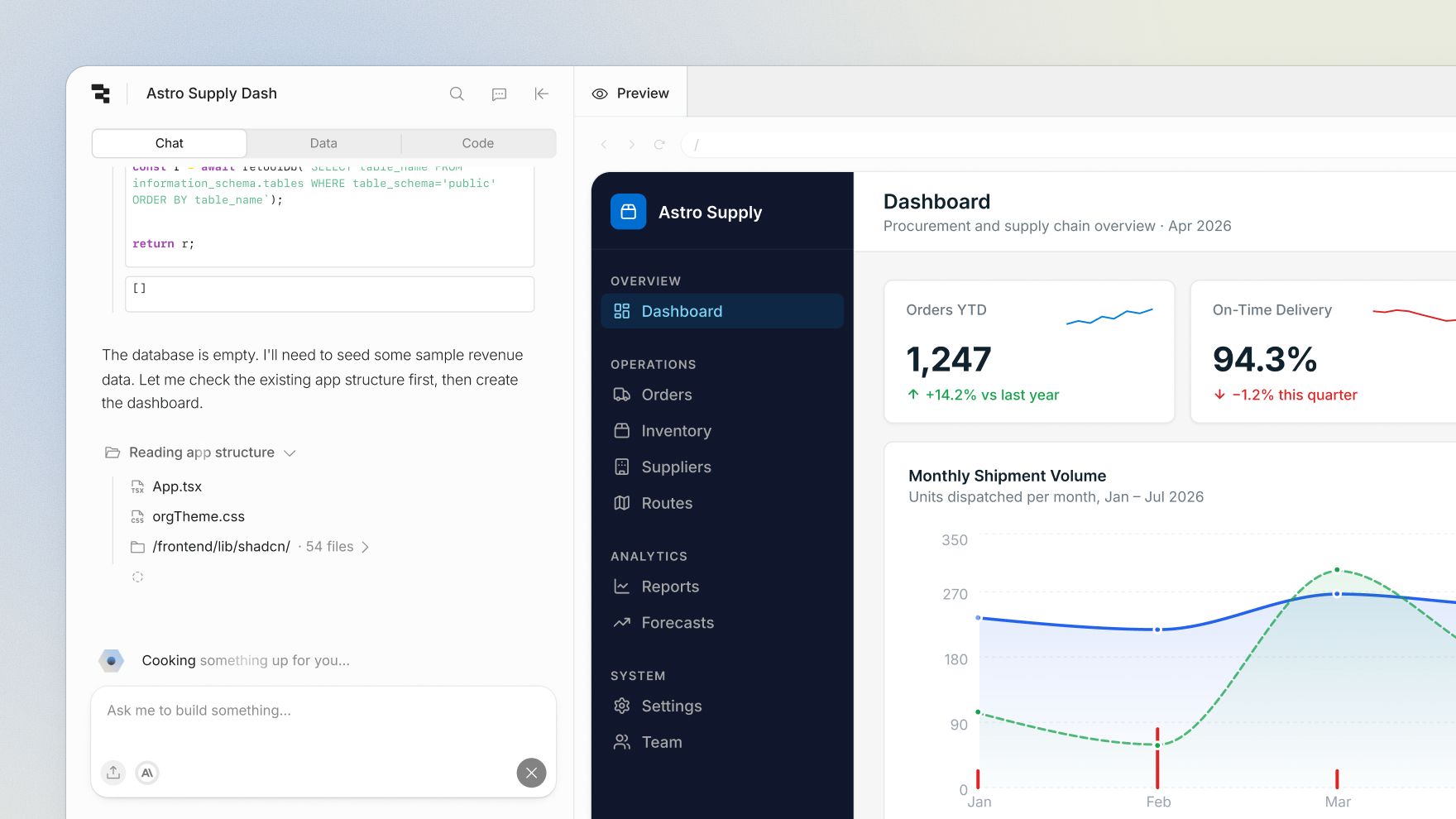
Image source: Retool
The core of this new era is the shift from static dashboards to autonomous agents. While traditional Retool apps required a human to click a button to trigger a SQL query, the 2026 iteration allows for "Agents" that can monitor data streams and take actions independently. This shift addresses the $500 billion AI investment gap by moving from "chatbots that talk" to "agents that work."
Understanding the Architecture of Retool AI Agents
Retool AI Agents represent a significant advancement in how enterprises handle repetitive tasks. Unlike standard LLM wrappers, these agents are natively integrated with Retool’s extensive library of connectors. This means an agent doesn't just suggest a response to a customer support ticket; it can actually query the production database, check a user's subscription status via Stripe, and issue a refund through a custom API—all within a governed environment.
Agents use models like Claude 3.5 or GPT-4o to interpret natural language prompts and plan a sequence of actions.
Agents leverage Retool's existing resource connections (SQL, REST, GraphQL) to interact with business data.
Developers can inspect "reasoning logs" to see exactly why an agent chose a specific path before it executes a write command.
A critical feature highlighted in recent BusinessWire reports is the autonomous nature of these agents. They are designed to operate without manual triggers. For example, an inventory management agent could be programmed to monitor stock levels and automatically generate purchase orders when items fall below a threshold, reasoning through historical lead times to determine the optimal order quantity.
To prevent these agents from "hallucinating" harmful actions, Retool has implemented a robust governance framework. This includes human-in-the-loop (HITL) confirmations for high-stakes actions and strict Role-Based Access Control (RBAC). If an agent does not have explicit permission to access a specific database schema, the LLM reasoning will fail at the execution step, maintaining the integrity of the enterprise data layer.
How AppGen Accelerates Enterprise Development Cycles
Alongside Agents, Retool has introduced AppGen, an AI-powered application generator. The goal of AppGen is to lower the barrier to entry for building functional UIs. Instead of manually dragging components onto a canvas, users can describe their needs in natural language—for example, "Build me a dashboard that tracks shipping delays and allows me to email customers directly from the table."
A major component of this launch is the Retool AWS partnership. By integrating with Amazon Bedrock, AppGen users can access the Nova model family and Amazon Transcribe directly within their apps. This collaboration ensures that Retool apps are not just UI layers, but are deeply integrated with the world's most widely used cloud infrastructure. As noted in official documentation, this allows for seamless processing of multi-modal data, such as analyzing support call transcripts to update CRM records automatically.
While AppGen is marketed toward "non-developers," its true value often lies in rapid prototyping for experienced engineers. It can generate 80% of a standard CRUD (Create, Read, Update, Delete) application in seconds, allowing developers to focus on the complex 20% that requires custom JavaScript transformers or intricate SQL logic. This hybrid approach significantly reduces the time-to-value for internal tooling projects.
Addressing the Vibe-Coding Crisis Through Governance
The term "vibe-coding" has emerged in 2026 to describe the trend of developers using AI to generate code that they don't fully understand or audit. This has led to a crisis of confidence among IT leaders. Recent surveys indicate that 93% of CIOs and CISOs are alarmed by the proliferation of ungoverned AI apps within their organizations. These apps often lack SSO (Single Sign-On), audit trails, and version control.
Retool positions itself as the solution to this crisis by acting as a Governed AI Runtime. When an app is built in Retool, it inherits the platform's enterprise-grade security features by default. This includes:
- Audit Logs: Every query run by an AI agent or a human user is logged with timestamps and metadata.
- Environment Staging: AI-generated workflows can be tested in a "Staging" environment before being promoted to "Production."
- Protected Branches: Integration with Git allows teams to review AI-generated changes before they are merged into the main application branch.
By providing these guardrails, Retool allows organizations to embrace the speed of AI development without sacrificing the security standards required by modern compliance frameworks like SOC2 or HIPAA. This governance is what differentiates a "toy" AI app from an enterprise-grade automation tool.
Connecting the Retool MCP Server to AI IDEs
For power users, the most exciting retool news is the introduction of the Model Context Protocol (MCP) Server. This technology allows developers to step outside the Retool web interface and interact with their Retool environment using AI-powered IDEs like Cursor, Claude, or VS Code. This "code-first" approach is a significant step forward for professional development workflows.
How to Set Up the Retool MCP Server
Connecting your local environment to Retool via MCP allows an AI assistant to read your Retool schemas, suggest SQL queries, and even write JavaScript transformers that sync directly to your apps. Follow these steps to get started:
- Generate an API Key: In your Retool settings, create a new API key with `read` and `write` permissions for Workflows and Apps.
- Configure your IDE: In Cursor or Claude Desktop, add a new MCP server entry. Use the Retool-provided endpoint URL.
- Define Context: Point the server to specific Retool "Spaces" or "Folders" so the AI assistant knows which apps it has permission to modify.
- Execute Commands: You can now use prompts like "Update the 'get_users' query in my 'Admin Dashboard' app to include a filter for 'last_login_date'."
| Feature | Web UI Development | MCP Server Development |
|---|---|---|
| Primary User | Product Managers / Analysts | Software Engineers |
| Speed | High for UI layout | High for complex logic |
| Version Control | Built-in History | Git-integrated |
| AI Assistance | Retool AI (Inline) | Cursor / Claude (Full Project Context) |
This workflow effectively treats Retool as a backend-as-a-service that can be managed via code. It bridges the gap between the ease of low-code and the precision of traditional software engineering, making it a top choice for teams that need to scale rapidly while maintaining high code quality.
Analyzing the Shift from Commercial SaaS to Custom Builds
A notable trend in 2026 is the "SaaS Replacement" movement. According to Retool's most recent Build vs. Buy report, approximately 35% of enterprises have started replacing traditional, off-the-shelf SaaS products with custom-built Retool applications. The primary drivers for this shift are cost reduction and the need for hyper-specific functionality that generic software cannot provide.
For instance, a logistics company might find that a standard CRM doesn't integrate well with their proprietary warehouse management system. By building a custom interface in Retool, they can unify their data and automate specific shipping workflows. One case study from Bold Tech highlights a user who achieved a 35% reduction in shipping costs simply by building a custom Retool app that optimized carrier selection based on real-time data.
This shift is also a response to "SaaS bloat," where companies pay for hundreds of features they never use. With Retool, organizations only build what they need. As AI makes the building process faster, the ROI of "building" is now frequently higher than the ROI of "buying" and then spending months on expensive integrations.
Evaluating the Non-Developer Experience in Modern Retool
Retool’s marketing often emphasizes that "non-developers" can build enterprise apps. However, expert developers like Jens Skott argue that this is a nuanced reality. While AppGen can create a UI, a deep understanding of SQL, API authentication, and data normalization is still required to build something that functions reliably at scale.
Without engineering buy-in, low-code platforms can quickly descend into "platform chaos." Common issues include:
- Duplicate Queries: Multiple users creating the same SQL query across different apps, leading to maintenance nightmares.
- Poor Naming Standards: Components named `textInput1`, `textInput2`, etc., making it impossible for others to debug the app.
- Security Leaks: Non-developers accidentally exposing sensitive data by not understanding how Retool’s server-side vs. client-side execution works.
The most successful organizations in 2026 treat Retool development as a formal Software Development Life Cycle (SDLC). They appoint "Retool Owners" who set standards for query library usage, module creation, and naming conventions. This ensures that while non-developers can contribute, the foundation of the platform remains architecturally sound.
Identifying Technical Pitfalls and Stability Challenges
Despite its growth, Retool is not without its technical hurdles. Community forums frequently discuss bugs that official press releases might overlook. Staying informed about these issues is essential for maintaining production-grade applications.
- The Navigation Loop Bug
- Users have reported instances where entire apps are replaced or stuck in a refresh loop during deployment. This often occurs when multiple editors are working on the same app without using "Spaces" or "Protected Branches."
- Query Failure False Negatives
- A common frustration involves the "Query run failed" error message appearing even when the backend operation (like a database write) actually succeeded. This can lead to duplicate data entries if users click the button multiple times.
- Resource Timeout Issues
- As apps become more complex, the default 10-second timeout for queries often proves insufficient. Developers must manually tune these settings and implement pagination to prevent UI lag.
To mitigate these risks, it is highly recommended to implement a "Stability Checklist" before moving any app to production. This includes verifying that all queries have appropriate error handling, ensuring that "Run query only when manually triggered" is selected for write operations, and utilizing Retool's built-in testing framework to simulate user interactions.
Frequently Asked Questions
Is Retool profitable in 2026?
What is the difference between Retool Agents and Workflows?
Can I run Retool on-premise with the new AI features?
How does the AWS partnership affect my current Retool bill?
What are the best alternatives to Retool in 2026?
Key Takeaways for Enterprise Leaders
- AI Agents are the new standard for autonomous labor, moving beyond simple chatbots to perform actual business actions.
- AppGen significantly reduces development time but requires engineering oversight to maintain architectural standards.
- The AWS partnership solidifies Retool’s infrastructure, providing native access to high-performance models like Nova.
- Governance is the primary defense against the "vibe-coding" crisis, with Retool providing the necessary audit logs and permissions.
- The MCP Server is a top-tier feature for professional developers, allowing for a code-first approach to low-code development.
- Build vs. Buy is shifting toward "build," with 35% of enterprises replacing generic SaaS with custom Retool solutions.
To maximize your investment, begin by auditing your existing manual workflows and identifying one high-impact process that can be automated using a Retool AI Agent today.