How to Choose and Build an Open Source Product Configurator That Actually Scales
Quick Summary: An open source product configurator provides the underlying logic and visualization framework to build custom product customization tools without vendor lock-in. While many software directories mislabel proprietary SaaS tools as "open source," true open source frameworks like openCPQ (MIT license) and Odoo's OCA Configurator (LGPL) offer developers full codebase access. Choosing the right framework depends heavily on your required ratio of visual rendering (where WebGL/Three.js excels) to complex manufacturing logic (where declarative rules engines are required).
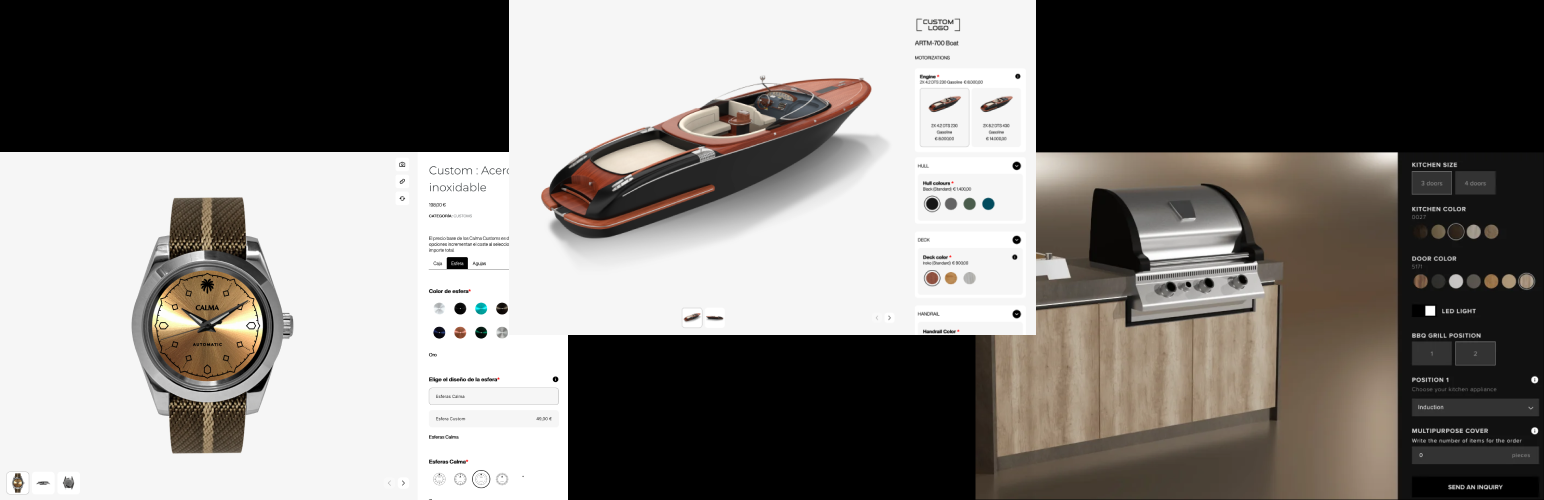
Image source: Staggs Product Configurator
What is an open source product configurator and why does it matter?
In the landscape of manufacturing and e-commerce, a product configurator is a specialized software tool that allows users to customize a product's features, colors, materials, and components in real-time. According to the NVIDIA technical glossary, advanced configurators are evolving into "digital twins," utilizing standards like OpenUSD to render photorealistic 3D models instantly.
It is crucial to distinguish a standalone configurator from a full CPQ (Configure, Price, Quote) system. As outlined in Salesforce's enterprise architecture documentation, the configurator handles the spatial and logical validation (e.g., "Can this specific engine fit into this specific chassis?"), while the broader CPQ system layers on commercial logic, dynamic pricing, and document generation.
The Shift to Browser-Side Logic
Historically, open source configurators relied heavily on server-side processing. Every time a user changed a dropdown menu or clicked a new color, the browser sent a request to the server, which recalculated the rules and sent back the updated state. This architecture often resulted in noticeable latency, especially for complex products with hundreds of interdependent variables.
Modern open source frameworks, such as openCPQ, represent a significant advancement by moving the configuration logic entirely to the browser. By leveraging JavaScript and React, these frameworks allow the rules engine to run locally on the user's device. This not only eliminates server round-trip latency but also enables HTML5 caching, allowing sales representatives to configure complex machinery in offline environments—a critical feature for field sales teams.
The Business Impact of Configuration
The transition from static catalogs to interactive configurators yields measurable business outcomes. Data from Zoovu's industry analysis indicates that implementing visual product configurators can lead to a 53% increase in conversion rates for consumer goods (as seen with Canon) and can reduce the time required to generate complex manufacturing quotes by up to 97%. For developers and IT leaders, building these tools on an open source foundation ensures that these business gains are not offset by escalating, per-user SaaS licensing fees.
The truth about "free" product configurators on the market
When engineering teams begin searching for an open source product configurator, they immediately encounter a significant hurdle: the widespread mislabeling of software in major B2B directories.
The SaaS Bait-and-Switch
A search through popular software directories like GetApp or G2 for "open source product configurators" frequently yields results that are entirely proprietary. Tools such as Zakeke, Prisync, and 3D Cloud are often categorized under "open source" or "free" simply because they offer a freemium tier, a free trial, or an open API. However, an open API is not open source. If you cannot fork the repository, inspect the core rules engine, and host the application on your own infrastructure, it is a closed SaaS product.
This bait-and-switch wastes valuable developer time. True open source software is defined by its licensing, which dictates exactly how you can use, modify, and distribute the code.
Licensing 101 for Configurators
Before investing development hours into a framework, verify its license type. The open source configurator ecosystem generally falls into three categories:
- MIT License
- Highly permissive. Frameworks like openCPQ use the MIT license, allowing you to use, copy, modify, merge, publish, distribute, sublicense, and even sell copies of the software without restriction. This is generally considered a top-tier option for commercial enterprise builds.
- GPL / LGPL (GNU General Public License)
- Copyleft licenses. Projects like the OCA Product Configurator for Odoo often use LGPL. While you can use and modify the software freely, if you distribute the software, you must make your modifications available under the same license. LGPL is slightly more flexible, allowing you to link the open source library to proprietary code without forcing your entire codebase to become open source.
- Proprietary with "Open" APIs
- Closed source. The vendor owns the code, and you rent access to it. You can build custom frontends using their APIs, but you are subject to their pricing changes, server uptimes, and feature roadmaps.
The "Rarely Free" Argument
It is important to acknowledge the counter-argument to open source. Industry voices, such as Elfsquad, argue that open source configurators are "rarely free" in practice. Their position is that the total cost of ownership (TCO) for an open source build—factoring in developer salaries, server maintenance, security patching, and the creation of custom integrations for ERP systems—often exceeds the cost of a proprietary API-first SaaS platform. Furthermore, they argue that open source frameworks frequently struggle with "black-box" calculations required for complex manufacturing supply chains.
This presents a classic build-versus-buy dilemma. Open source eliminates vendor lock-in and per-user licensing fees, but it shifts the burden of maintenance entirely onto your internal engineering team.
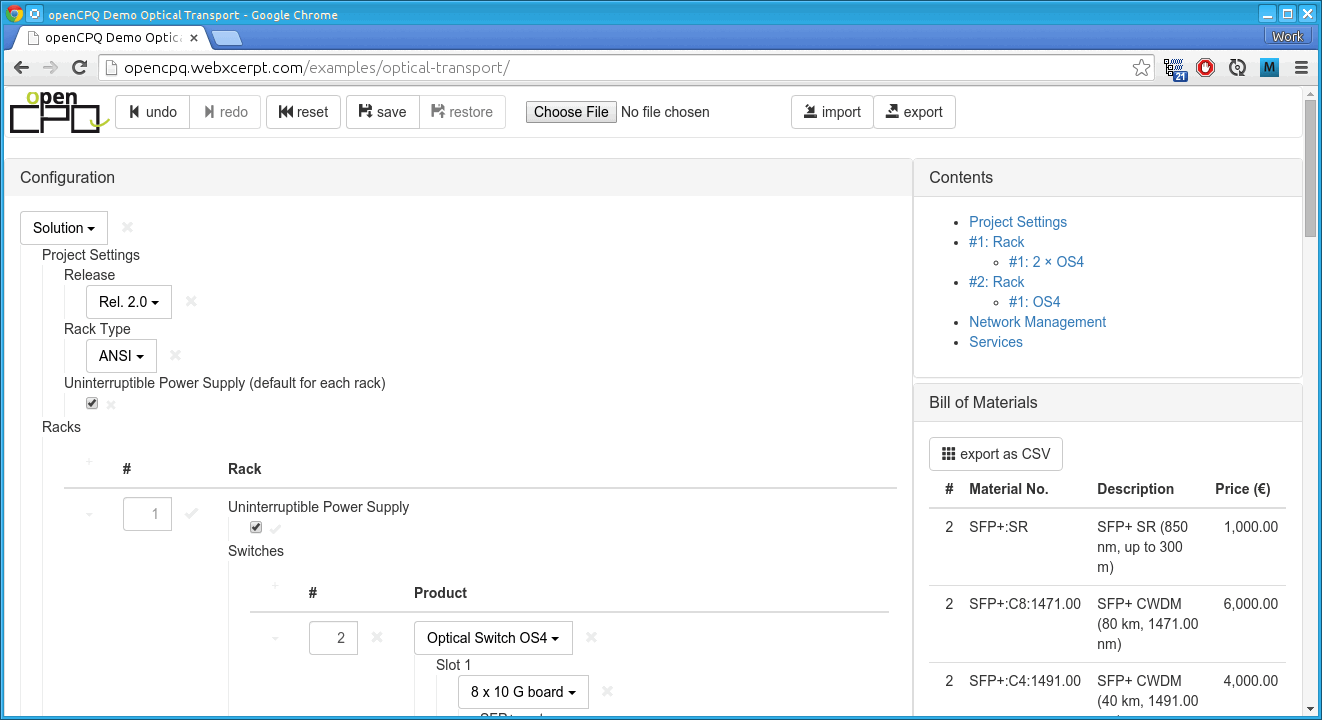
Image source: webXcerpt Software GmbH
Top open source product configurator frameworks for developers
If your organization has decided that the benefits of code ownership outweigh the maintenance costs, the next step is selecting the right foundation. Rather than building a rules engine from scratch—a notoriously difficult computer science problem—developers should leverage existing frameworks. The following options rank among the top choices, categorized by their primary technical strengths.
1. openCPQ (The Developer’s Choice for Logic)
Built on JavaScript and React, openCPQ is widely regarded as one of the most robust open source frameworks for handling complex configuration logic. Its defining feature is its use of declarative modeling.
In imperative programming (which many developers default to), you write code that says, "If the user selects a heavy-duty frame, add $50 to the price and disable the lightweight wheels." This approach quickly becomes a tangled web of conditional statements that is nearly impossible to debug as the product grows. openCPQ uses declarative functional programming, where you define the mathematical and logical relationships between components. The engine automatically recomputes the entire state whenever an input changes, drastically reducing state-management errors.
2. OCA Product Configurator for Odoo (The ERP Integration Choice)
For organizations already utilizing the Odoo ecosystem, the Odoo Community Association (OCA) maintains a highly capable product configurator written in Python. Unlike standalone JS frameworks, the OCA configurator is deeply embedded into the ERP architecture.
This makes it an excellent choice for manufacturing environments where a configuration must instantly generate a dynamic Bill of Materials (BOM), update inventory routing, and trigger manufacturing orders. Its strength lies in backend operational alignment rather than flashy frontend 3D rendering.
3. Polygonjs and Three.js (The Visual-First Stack)
If your primary goal is high-end, interactive 3D visualization, logic-heavy frameworks may not be sufficient. Three.js is the foundational JavaScript library for rendering WebGL in the browser. Polygonjs is a node-based, visual editor built on top of Three.js that allows technical artists to create complex 3D configurators without writing extensive boilerplate code.
While these tools are exceptionally strong for visual rendering, they lack built-in commercial rules engines. Developers typically pair a visual frontend (Three.js) with a headless logic backend to achieve both visual fidelity and accurate pricing.
How to build vs. buy: A decision framework for your business
Choosing between a true open source framework and an API-first SaaS product requires a clear understanding of your internal resources and long-term goals. The table below outlines the key differences to help guide your architectural decisions.
| Feature / Requirement | True Open Source (e.g., openCPQ) | API-First SaaS (e.g., Elfsquad, Zakeke) |
|---|---|---|
| Code Ownership | 100% owned. No vendor lock-in. | Rented. Subject to vendor terms. |
| Hosting & Infrastructure | Self-hosted (AWS, Azure, local servers). | Cloud-hosted by the vendor. |
| Custom Logic Capability | Unlimited. You can write custom algorithms. | Limited to the vendor's API endpoints and rules engine. |
| Time to Market | Slower. Requires significant custom development. | Faster. Pre-built UI components and integrations. |
| Cost Structure | High initial dev cost, low ongoing software cost. | Lower initial dev cost, high recurring subscription fees. |
| Best Suited For | Tech-heavy companies with unique, proprietary logic. | Manufacturers needing rapid deployment and standard ERP links. |
The case for building with open source is strongest when your product logic is a core competitive advantage that proprietary tools simply cannot accommodate. Conversely, if your configuration rules are relatively standard but you need to integrate with dozens of external supplier databases for real-time pricing, an API-first SaaS platform may offer a more pragmatic path.
Common technical pitfalls and how to avoid them
Building a product configurator exposes developers to unique edge cases that standard web development rarely encounters. Based on technical post-mortems and developer community discussions, here are the most common pitfalls and how to engineer around them.
The 30-Character Trap
A frequent frustration found in enterprise configurator environments (such as the limitations discussed in Epicor Kinetic developer forums) is arbitrary database constraints. For example, some legacy systems restrict control names or variable IDs to 30 characters. In a complex configurator, developers naturally use verbose naming conventions (e.g., chk_HeavyDutySuspension_RearAxle) to maintain readability. Hitting a 30-character limit forces developers to use cryptic abbreviations (e.g., chk_HDSusp_RAx), which creates massive technical debt and makes onboarding new developers incredibly difficult. When setting up your open source database schema, ensure your variable ID fields are configured to handle long, descriptive strings.
UI Rigidity and the Need for Pre-Planning
Many configurator frameworks couple the UI layout tightly to the underlying logic. A common architectural mistake is building the logic sequentially as the UI is designed. If a product manager later decides that the "Material Selection" step should occur before the "Dimensions" step, developers often find that moving controls between pages breaks the state dependencies.
To avoid this, follow these pre-planning steps:
- Decouple your state management from your UI components using a global store (like Redux or Zustand in React).
- Map the entire user flow on paper or in a wireframing tool before writing any rules engine logic.
- Ensure your rules engine evaluates the entire state object simultaneously, rather than relying on the sequential order of user inputs.
For highly complex products requiring hundreds of input variables (e.g., industrial machinery), manually entering data into a configurator's admin UI is prone to error. A widely used workaround in the developer community is the "Excel Paste Insert" method. Instead of using the UI, developers format their configuration variables, constraints, and pricing rules in a structured Excel spreadsheet. They then write a simple parsing script (using libraries like SheetJS) to convert the CSV data directly into the JSON format required by the open source framework's state manager. This allows for rapid bulk updates and version control of the configuration logic via Git.
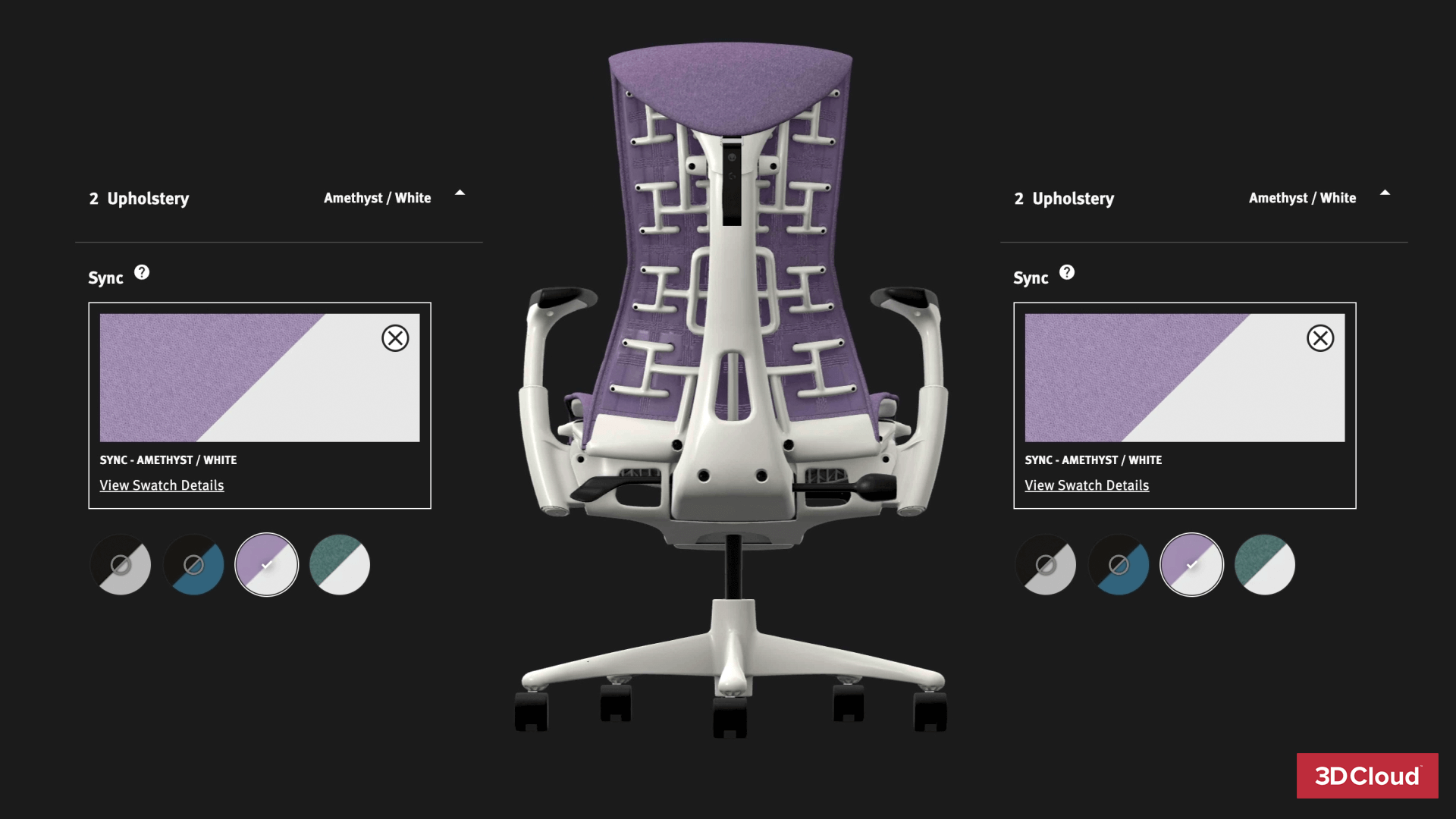
Image source: 3D Cloud
Advanced workflows for modern product configuration
The architecture of product configurators is evolving rapidly. Developers are moving away from monolithic applications toward modular, headless designs that integrate emerging technologies.
Headless CPQ Architecture
A headless architecture separates the frontend user interface from the backend logic engine. In this setup, an open source framework like openCPQ acts purely as an API-driven rules engine. The frontend can be built using any modern framework (Next.js, Vue) and deployed on edge networks for maximum speed. When a user makes a selection, the frontend sends a lightweight JSON payload to the headless configurator, which validates the request and returns the updated price and valid options. This allows the same configuration logic to power a web store, a mobile app, and an internal sales portal simultaneously.
Digital Twins and OpenUSD
For visual rendering, the industry is standardizing around Universal Scene Description (OpenUSD), originally developed by Pixar and now championed by NVIDIA. OpenUSD allows developers to create highly complex, photorealistic 3D assets that can be shared seamlessly across different 3D tools and web renderers. Integrating OpenUSD with an open source configurator allows for the creation of "digital twins"—exact virtual replicas of physical products that update in real-time as configuration parameters change.
AI-Augmented Configuration
The integration of Large Language Models (LLMs) is a notably innovative development in this space. Instead of forcing users to navigate complex dropdown menus, developers are experimenting with natural language interfaces. A user can type, "I need a heavy-duty workbench suitable for a small corner office, preferably in dark wood." The LLM parses this intent, maps it to the specific variable IDs in the open source configurator, and instantly generates a valid product configuration that meets those constraints.
Frequently Asked Questions
What are the top open source 3D product configurators?
For pure 3D visualization, libraries like Three.js and Babylon.js are widely considered top choices, while Polygonjs offers a node-based visual editor built on Three.js. However, these are rendering engines, not full configurators. To build a complete system, developers typically pair these visual libraries with a logic framework like openCPQ to handle pricing and rule validation.
Is there a free product configurator for WooCommerce?
While there are many "free" plugins in the WordPress repository, most operate on a freemium model where advanced logic requires a paid upgrade. For a truly open source approach, developers often build a custom React frontend using Three.js and connect it to WooCommerce via the REST API to handle the final cart addition and checkout process.
What is the difference between declarative and imperative modeling in configurators?
Imperative modeling uses step-by-step instructions (e.g., "If X is selected, change Y to Z"). This becomes highly unstable as rules multiply. Declarative modeling, used by frameworks like openCPQ, defines the relationships and constraints between components (e.g., "X and Y cannot coexist"). The engine automatically calculates the valid state based on these declarations, making it significantly less error-prone for complex products.
Can I run an open source configurator offline?
Yes, provided the architecture relies on browser-side logic rather than server-side processing. Frameworks built on JavaScript/React can download the entire rules engine and product dataset to the browser upon initial load. Using HTML5 caching and Service Workers, the configurator can function entirely offline, which is highly beneficial for field sales representatives.
How do I handle complex pricing rules in an open source build?
Complex pricing should be handled by a dedicated rules engine rather than hardcoded conditional statements. You can define pricing matrices in structured formats (like JSON or CSV) and write functional scripts that calculate the total by iterating through the selected components and applying relevant multipliers, discounts, or dimensional formulas based on the current state object.
The Bottom Line
Building an open source product configurator offers total control over your codebase and eliminates recurring SaaS fees, but it requires a strategic approach to architecture and logic management. To ensure your project scales effectively, keep these core principles in mind:
- Verify the license before committing; ensure the framework uses MIT or GPL rather than just offering an "open API."
- Separate logic from visuals by using a headless architecture (e.g., openCPQ for rules, Three.js for rendering).
- Use declarative modeling to define product relationships, avoiding the technical debt of imperative "if/then" coding.
- Decouple state from UI early in the process to prevent layout changes from breaking your configuration logic.
- Plan for bulk data management by utilizing spreadsheet-to-JSON parsing scripts for complex product catalogs.