How to Get Hired at Kojima Productions
Founded in December 2015 by industry veteran Hideo Kojima, Kojima Productions operates as an independent studio with a massive global footprint. Known for pushing the boundaries of cinematic storytelling and technical fidelity with titles like Death Stranding, the studio attracts thousands of applications from developers worldwide.
However, the gap between submitting a resume and walking through the doors of their Shinagawa office is significant. The studio maintains rigorous standards, and understanding the nuances of their specific hiring culture—from language expectations to portfolio requirements—is essential for any serious candidate.
What Is It Like to Work at the Kojima Productions Tokyo Studio?
Working at Kojima Productions is heavily defined by the studio's core philosophy: "From Sapiens to Ludens" (those who play). This ethos is not just marketing material; it actively shapes the creative expectations placed on employees. The studio operates on a scale of 51 to 200 employees, according to Glassdoor company profiles, allowing it to remain relatively agile compared to massive corporate publishers, while still commanding AAA budgets and global partnerships.
The physical workspace itself is a major part of the studio's identity. Recently redesigned under the theme of "Spaceship Transformation," the office is located in the Shinagawa Season Terrace building in Minato-ku, Tokyo. The interior features stark white corridors, futuristic lighting, and a life-sized statue of the studio's mascot, Ludens, at the entrance. The design is intended to evoke the feeling of embarking on a journey into the unknown, fostering a highly focused, creative atmosphere.
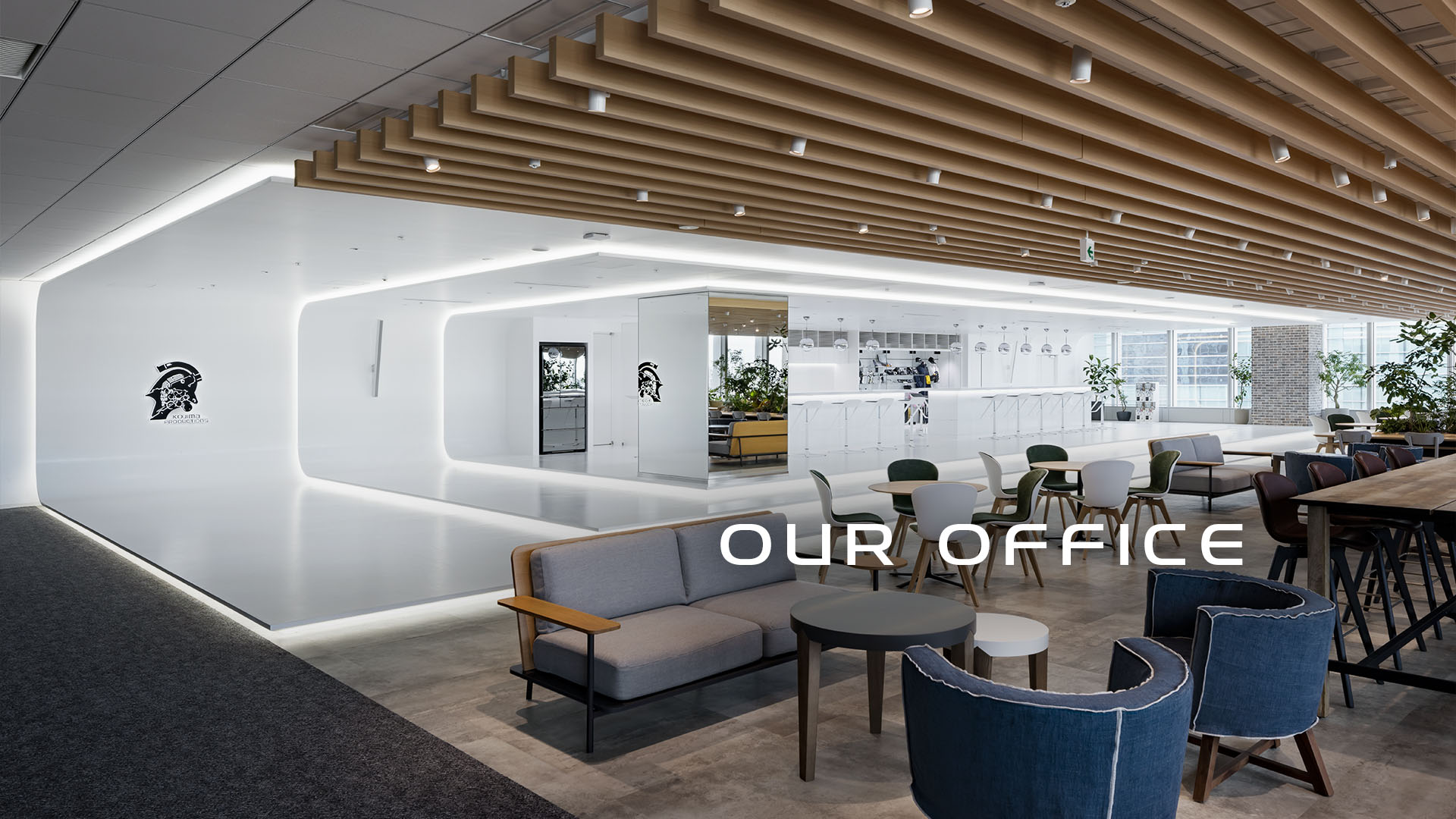
Image source: Kojima Productions
Culturally, the studio blends traditional Japanese corporate structure with international game development practices. Because it is an independent entity, leadership—specifically Hideo Kojima—maintains a high level of oversight regarding creative direction. Employees are expected to deliver work that aligns with a very specific, highly polished cinematic vision. This environment is highly rewarding for those who thrive on detail-oriented work, though it naturally demands a strong commitment to project deadlines.
Where to Find Official Kojima Productions Job Openings
The studio centralizes its hiring efforts through two primary channels. The most direct route is the official Kojima Productions Careers page, which lists all currently available roles categorized by discipline (Programming, Art, Game Design, Sound, etc.). Additionally, the studio actively maintains listings on their official LinkedIn company page, which is often the preferred platform for international applicants to track new openings.
When applying, candidates must be aware of the studio's strict communication policies. Due to the sheer volume of applications received globally, Kojima Productions operates on a "successful candidates only" contact policy. If your portfolio does not pass the initial screening phase, you will generally not receive a rejection email. This is a common practice in highly competitive AAA studios, but it requires applicants to manage their own expectations.
The 180-Day Re-application Rule
If you apply for a position and do not advance, official studio policy dictates that you must wait a minimum of 180 days (approximately 6 months) before submitting another application for the same or a similar role. This waiting period ensures that candidates have sufficient time to meaningfully improve their portfolios or gain new experience before being evaluated again.
Do You Really Need to Speak Japanese to Work for Hideo Kojima?
The topic of language proficiency is one of the most frequently misunderstood aspects of applying to Kojima Productions. According to the official careers FAQ, the baseline requirement is proficiency in either Japanese or English. Because the studio collaborates with global partners (such as Sony Interactive Entertainment and various Hollywood actors), English is highly valued.
However, community insights and reports from industry professionals reveal a more nuanced reality. While English might get your foot in the door for highly specialized technical roles, N1-level Japanese (the highest level of the Japanese Language Proficiency Test) is widely considered the gold standard for long-term success and integration at the studio.
Consider the day-to-day operations: the majority of the core staff, department leads, and directors are Japanese. While translators and localization teams exist, relying entirely on them can slow down the iterative creative process. For roles in Game Design, Production, or any position requiring nuanced discussions about narrative and pacing, fluent Japanese is effectively a prerequisite.
There are exceptions. Technical roles, such as Engine Programmers working with the Decima Engine, often operate in environments where code, technical documentation, and global standard practices are primarily in English. To support international staff who are hired based on exceptional technical or artistic merit, the studio does offer in-house language classes to help bridge the communication gap over time.
Which Roles Are Currently in High Demand?
While hiring needs fluctuate based on the studio's current project lifecycle, certain disciplines consistently see high demand due to the specific type of games Kojima Productions develops.
Engine & Systems
The studio utilizes the Decima Engine (originally developed by Guerrilla Games). Programmers with deep C++ knowledge, experience in memory management, and familiarity with proprietary engine architecture are highly sought after to push hardware limits.
Cinematic Artists
Given the studio's reputation for film-quality cutscenes, there is a constant need for Cinematic Artists, Lighting Artists, and Facial Animators who can deliver photorealistic results and understand cinematic framing.
Localization & Outreach
Professionals who can seamlessly translate not just language, but cultural context between the Tokyo development floor and Western publishing partners serve a critical function in the studio's pipeline.
What Should You Include in Your Portfolio to Stand Out?
A resume alone is rarely enough to secure an interview at a top-tier studio. For Kojima Productions, the portfolio is the single most critical component of your application. The studio explicitly states that while recent graduates may not need a traditional CV if they lack industry experience, a comprehensive portfolio is absolutely mandatory.
For artists, the focus should be on quality over quantity. The studio looks for a specific aesthetic—highly detailed, grounded in realism, yet featuring imaginative, sci-fi elements. Environment artists should showcase an understanding of scale, weathering, and lighting, while character artists must demonstrate mastery of anatomy and high-fidelity texturing.
For technical roles, particularly Gameplay Programmers, there is a specific requirement that catches many applicants off guard. Rather than simply submitting isolated code snippets or GitHub repositories, competitive candidates are often expected to submit a self-built, self-contained playable game or demo. This requirement proves that the applicant understands the entire development pipeline—from input handling and memory allocation to rendering and game loop optimization—rather than just a single isolated system.

Image source: Kojima Productions
How the Application and Interview Process Works Step by Step
The hiring pipeline at Kojima Productions is thorough and can take anywhere from one to three months to complete. Candidates should prepare for a multi-stage evaluation designed to test both technical proficiency and cultural fit.
-
Document and Portfolio Screening
After submitting your application via the official portal, the recruitment team and relevant department leads will review your materials. This initial phase typically takes between one week and one month. Remember, you will only be contacted if you are selected to move forward. -
Technical or Art Assignments
If your portfolio passes the initial check, you may be issued a take-home assignment. For artists, this could involve modeling a specific prop or lighting a scene to match the studio's art direction. For programmers, it often involves solving a complex algorithmic problem or optimizing a piece of provided code within a strict time limit. -
The Interview Rounds
Candidates who succeed in the assignment phase will face two to three rounds of interviews. These are typically conducted via video call for international applicants. The first round focuses on technical skills with department leads. Subsequent rounds assess your problem-solving approach, ability to handle feedback, and alignment with the studio's creative philosophy. -
Offer and Visa Processing
If successful, an official offer is extended. For international hires, this triggers the visa sponsorship process. The studio's HR department assists with obtaining the Certificate of Eligibility (COE) required to work in Japan, a process that can take several additional months depending on immigration processing times.
Relocating to Tokyo: Visa Support and Employee Benefits
Kojima Productions actively hires global talent regardless of nationality. To facilitate this, the studio provides comprehensive visa sponsorship for successful international applicants. Moving to Japan involves significant bureaucratic hurdles, but the studio's HR team guides new hires through the necessary paperwork to secure a working visa.
Beyond visa support, the studio offers housing assistance. Finding an apartment in Tokyo as a foreigner can be notoriously difficult due to guarantor requirements and language barriers. The studio provides support in navigating the competitive Minato-ku real estate market or finding suitable accommodations along major transit lines connecting to Shinagawa Station.
Once established, employees have access to a range of benefits designed to support a high-performance lifestyle. These include:
- In-house massage rooms to alleviate the physical strain of desk work.
- Company-sponsored fitness classes.
- On-the-job training (OJT) and language classes.
- Five days of dedicated summer vacation, in addition to standard Japanese national holidays and paid time off.
- Free beverages and a highly curated cafeteria space.
The studio's location at Shinagawa Season Terrace is highly strategic. Shinagawa is one of Tokyo's major transit hubs, offering easy access to the Shinkansen (bullet train) and direct lines to Haneda Airport, making it convenient for international travel and daily commuting.
The Truth About Remote Work at Kojima Productions
In the post-2020 landscape, many game developers seek fully remote positions. It is crucial to clarify Kojima Productions' stance on this, as job aggregator sites sometimes mislabel their listings.
Kojima Productions does not offer overseas remote work. If you are hired, you must relocate to Japan. The studio's creative process relies heavily on in-person collaboration, rapid iteration, and secure access to proprietary development hardware that cannot be easily distributed internationally.
The studio does offer "telework" options, but these are strictly for local employees residing in Japan. This hybrid flexibility is primarily intended to support staff with families, allowing them to manage childcare or other personal responsibilities while remaining integrated into the Tokyo-based team. International applicants should plan for full relocation.
Comparing Official Requirements vs. Competitive Reality
To help applicants self-assess their chances, it is helpful to contrast the baseline official requirements listed on job postings with the actual profiles of candidates who successfully secure offers.
| Requirement Category | Official Minimum Stated | The Competitive Reality |
|---|---|---|
| Language Proficiency | English OR Japanese proficiency. | N1 Japanese + English fluency is highly preferred for non-technical roles. |
| Location | Willing to relocate to Tokyo. | Mandatory relocation; no overseas remote work permitted under any circumstances. |
| Portfolio (Tech) | Code samples / GitHub link. | A self-contained, playable demo built from scratch demonstrating engine-level understanding. |
| Experience (Grads) | No CV required for recent graduates. | Must possess a portfolio that rivals junior-level industry professionals. |
Frequently Asked Questions
- Does Kojima Productions offer internships?
- Formal, short-term internships are relatively rare at the studio. Instead, they focus heavily on "New Graduate" recruitment. Recent graduates are encouraged to apply directly for full-time junior positions, provided they have an exceptionally strong portfolio to compensate for their lack of professional experience.
- What game engine does the studio use?
- The studio primarily utilizes the Decima Engine. Originally created by Guerrilla Games (the developers behind Horizon Zero Dawn), the engine was shared with Kojima Productions and heavily modified to suit their specific needs for rendering massive open worlds and high-fidelity cinematic sequences.
- Can I apply if I don't have previous game industry experience?
- Yes, it is possible, though challenging. The studio values raw talent and technical capability. If your portfolio demonstrates a level of polish and technical understanding that meets AAA standards, a lack of formal studio experience will not automatically disqualify you, especially for entry-level or specialized art roles.
- How long does the whole hiring process take?
- From the moment you submit your application to receiving a final offer, the process typically takes between one to three months. This timeline accounts for document screening, technical assignments, multiple interview rounds, and internal reviews. Visa processing for international hires will add several additional months to your actual start date.
- Is Hideo Kojima involved in the hiring process?
- As the head of an independent studio, leadership maintains a high degree of oversight. While initial screenings and technical interviews are handled by HR and department leads, senior leadership is heavily involved in the final approval stages to ensure all new hires align with the studio's overarching creative vision.
Key Takeaways for Your Kojima Productions Application
Securing a position at one of the industry's most prominent independent studios requires meticulous preparation. Before submitting your application, ensure you have accounted for these critical factors:
- Relocation is non-negotiable: You must be prepared to move to Tokyo; overseas remote work is not an option.
- Build a playable demo: If applying for a programming role, submit a self-contained project that proves your understanding of full game loops, not just isolated code.
- Prioritize Japanese study: While English is accepted, achieving N1 Japanese proficiency serves as a massive competitive advantage for long-term career growth at the studio.
- Curate for cinematic quality: Art portfolios must demonstrate an understanding of photorealism, lighting, and the specific "Kojima-esque" attention to detail.
- Respect the 6-month rule: If rejected, you must wait 180 days before reapplying, so only submit your work when it represents your absolute highest standard.