How to Invest in Leading China AI Stocks and Navigate the Shift Toward Hard Tech
As of August 2026, the Chinese AI investment landscape has pivoted from consumer internet platforms to "Hard Tech"—specifically semiconductors and physical AI. CXMT (ChangXin Memory Technologies) stands out as a top-performing mainland asset following its record-breaking IPO, while Baidu remains a primary play for generative AI through its ERNIE 5.0 model. Investors are increasingly favoring Hong Kong-listed shares (HKEX) over US ADRs to mitigate delisting risks and the complexities of the Variable Interest Entity (VIE) structure.
The Changing Landscape of Chinese Artificial Intelligence Investing
The year 2026 has marked a definitive era in the Chinese capital markets. For years, the narrative surrounding China AI stocks was dominated by the "Big Three"—Baidu, Alibaba, and Tencent. However, a significant strategic pivot by Beijing has redirected the flow of capital toward foundational hardware. According to recent reports from Bloomberg, China is now leveraging its $28 trillion capital market to fund chip tech dominance, moving away from direct state subsidies toward market-driven "Hard Tech" investments.
This shift was most visibly demonstrated by the debut of CXMT Corp. on the Shanghai STAR Market. The company, formerly known as ChangXin Memory Technologies, saw its stock price surge by 535% on its first day of trading, briefly making it the most valuable company in mainland China. This event signaled to global investors that the "brain" of AI (software) is now being outpaced by the "body" and "skeleton" (hardware and infrastructure) in terms of state priority and investor sentiment.
Currently, the CSI Artificial Intelligence Index has outperformed the broader CSI 300 by nearly 24% in the first half of 2026. While US-listed Chinese stocks face ongoing regulatory scrutiny, the domestic A-share market and the Hong Kong Stock Exchange (HKEX) have become the primary theaters for AI growth. Investors must now distinguish between companies providing "concept-only" AI and those with integrated supply chains and proprietary hardware.
Why the Chinese AI Market Is Shifting Toward Hard Tech
The term "Hard Tech" refers to industries that require deep scientific research and significant capital expenditure, such as semiconductors, robotics, and advanced materials. In the context of Chinese industrial policy, Hard Tech is the top priority for achieving "self-reliance" in the face of Western export restrictions.
In the 2026 market, Hard Tech refers to companies that own the physical means of AI production. This includes DRAM manufacturers like CXMT, lithography specialists, and robotics firms that integrate AI into physical labor.
According to Yahoo Finance, CXMT has successfully positioned itself as the world's fourth-largest DRAM producer, trailing only Samsung, SK Hynix, and Micron. Nomura projections suggest that CXMT’s global market share could rise from 10% to 18% by 2028, driven by domestic demand for AI servers that are not reliant on US-origin technology.
This hardware-first approach is a defensive necessity. As Large Language Models (LLMs) become more resource-intensive, the ability to produce high-bandwidth memory (HBM) and advanced logic chips domestically becomes the bottleneck for all other AI applications. Consequently, stocks in the semiconductor supply chain are often viewed as "safer" bets by institutional investors in China, as they align perfectly with the central government's five-year plans.
Which Chinese AI Stocks Are Leading the Race in 2026?
While the market has broadened, several key players have established themselves as leaders in their respective niches. We categorize these into three distinct pillars: Generative AI, Physical AI, and Infrastructure.
Baidu and the Evolution of ERNIE 5.0
Baidu remains a top-tier option for those seeking exposure to the software side of the AI boom. Its latest model, ERNIE 5.0, features 2.4 trillion parameters, making it one of the most capable models globally. Unlike earlier iterations, ERNIE 5.0 is optimized for "agentic" workflows, allowing it to perform complex tasks across Baidu’s ecosystem without human intervention.
Beyond the chatbot, Baidu’s Apollo Go robotaxi service has reached a significant milestone. As of mid-2026, the service processes approximately 250,000 orders per week across 12 Chinese cities. This real-world application of AI provides a data flywheel that few competitors can match, as the 17 million total rides to date provide a massive dataset for refining autonomous driving algorithms.
Alibaba and the Qwen Model Series
Alibaba has taken a different route, focusing on open-source dominance. Its Qwen series of models has become the standard for Chinese developers, similar to Meta’s Llama in the West. By offering high-performance models for free or at low cost, Alibaba is locking developers into its Alibaba Cloud ecosystem. This synergy is a significant driver of revenue, as AI-related cloud consumption now accounts for over 35% of Alibaba Cloud's total growth.
Xiaomi and the Physical AI Revolution
Xiaomi has transitioned from a smartphone manufacturer to a leader in "Physical AI." Its HAD (Hyper Autonomous Driving) system, integrated into the SU7 and subsequent EV models, is trained on a "world model" consisting of 10 million video clips. Furthermore, Xiaomi’s foray into AI wearables, such as the Xiaomi AI Glasses, offers a battery life of 8.6 hours—a figure that ranks among the top in the industry, exceeding many Western competitors.
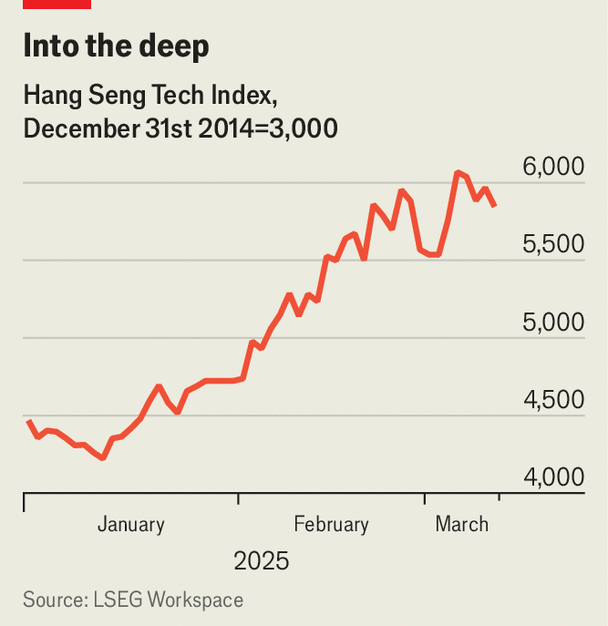
Image source: The Economist
How to Buy Chinese AI Stocks Without Getting Delisted
For international investors, the primary risk is not the technology, but the regulatory structure. The Holding Foreign Companies Accountable Act (HFCAA) in the US continues to pose a delisting threat to ADRs (American Depositary Receipts) like BIDU or BABA if audit requirements are not met.
The most effective strategy to mitigate this risk is the ADR-to-HKEX conversion. Most major Chinese AI companies have dual-primary or secondary listings in Hong Kong. By holding the Hong Kong-listed shares (e.g., 9888.HK for Baidu), investors are insulated from a potential New York Stock Exchange delisting.
Most US-listed Chinese AI stocks use a Variable Interest Entity (VIE) structure. This means you do not own shares in the actual Chinese operating company, but rather in a Cayman Islands shell company that has a contractual right to the profits. This remains a significant legal gray area.
| Asset Type | Exchange | Accessibility | Delisting Risk |
|---|---|---|---|
| US ADRs | NYSE / NASDAQ | High (Any US Broker) | High (HFCAA) |
| H-Shares | HKEX (Hong Kong) | Medium (International Brokers) | Low |
| A-Shares | SSE / SZSE (Mainland) | Low (Stock Connect Only) | None |
Step-by-Step: Converting ADRs to Hong Kong Shares
- Verify Broker Support: Ensure your brokerage (e.g., Interactive Brokers, Charles Schwab) supports trading on the Hong Kong Stock Exchange.
- Request Conversion: Contact your broker's corporate actions department to request a "conversion of ADRs to ordinary shares."
- Pay the Fee: There is typically a fee (approx. $0.05 per share) and a waiting period of 2-5 business days.
- Confirm Ticker Change: Your BIDU shares will disappear and be replaced by 9888.HK in your portfolio.
How to Spot Fake AI Stocks and Avoid Regulatory Crackdowns
As the AI boom intensifies, the China Securities Regulatory Commission (CSRC) has become increasingly vigilant. In mid-2026, the CSRC issued a stern warning against "tech hype" speculation, where companies with no genuine R&D suddenly add "AI" to their names or marketing materials to pump stock prices.
According to CNBC, the regulator is specifically investigating the use of AI-powered stock-picking tools that target retail investors. These tools often create feedback loops that lead to market bubbles. To avoid "concept-only" traps, investors should look for the following red flags:
- Low R&D Spending: If a company claims to be an AI leader but spends less than 10% of revenue on R&D, it is likely a "concept" stock.
- Sudden Pivots: Be wary of companies in unrelated fields (e.g., textile manufacturing or food processing) that suddenly announce "AI data center" projects.
- Lack of Patents: Genuine leaders like Baidu and Tencent hold thousands of AI-related patents. Check the China National Intellectual Property Administration filings for verification.
Comparing Chinese AI Models Against US Competitors
A common question among investors is whether Chinese models can truly compete with the likes of OpenAI’s GPT-4 or Google’s Gemini. While the "parameter race" is one metric, latency and cost-per-token are where the real competition lies.
In terms of raw scale, ERNIE 5.0 (2.4T parameters) and Kimi K2 (1T parameters) are highly competitive with Western models. However, due to the scarcity of high-end Nvidia H100/B200 chips, Chinese firms have become exceptionally strong at "model pruning" and "quantization"—techniques that allow large models to run on less powerful hardware. This makes Chinese AI models often more efficient for enterprise applications where cost is a primary concern.
From a valuation perspective, the gap is startling. While Nvidia and Microsoft trade at high P/E multiples, many Chinese AI leaders trade at a significant discount. This is largely due to the "geopolitical risk premium." Investors are essentially getting the same growth potential at a fraction of the price, provided they can stomach the volatility of the US-China relationship.
Top-Rated China AI ETFs for Diversified Exposure
For those who prefer a basket approach, several ETFs offer targeted exposure to the Chinese AI ecosystem. These vehicles manage the complexities of buying mainland A-shares and Hong Kong listings on behalf of the investor.
- Themes China Generative AI ETF (DRGN): This fund focuses specifically on the software and model-building side of the industry. It includes heavy weightings in Baidu, Alibaba, and SenseTime.
- Global X China Semiconductor ETF: A top choice for those following the "Hard Tech" thesis. It holds significant positions in SMIC and domestic equipment manufacturers.
- KraneShares CSI China Internet ETF (KWEB): While not a pure AI play, KWEB remains the most liquid way to trade the large-cap tech names that are funding the majority of China's AI research.
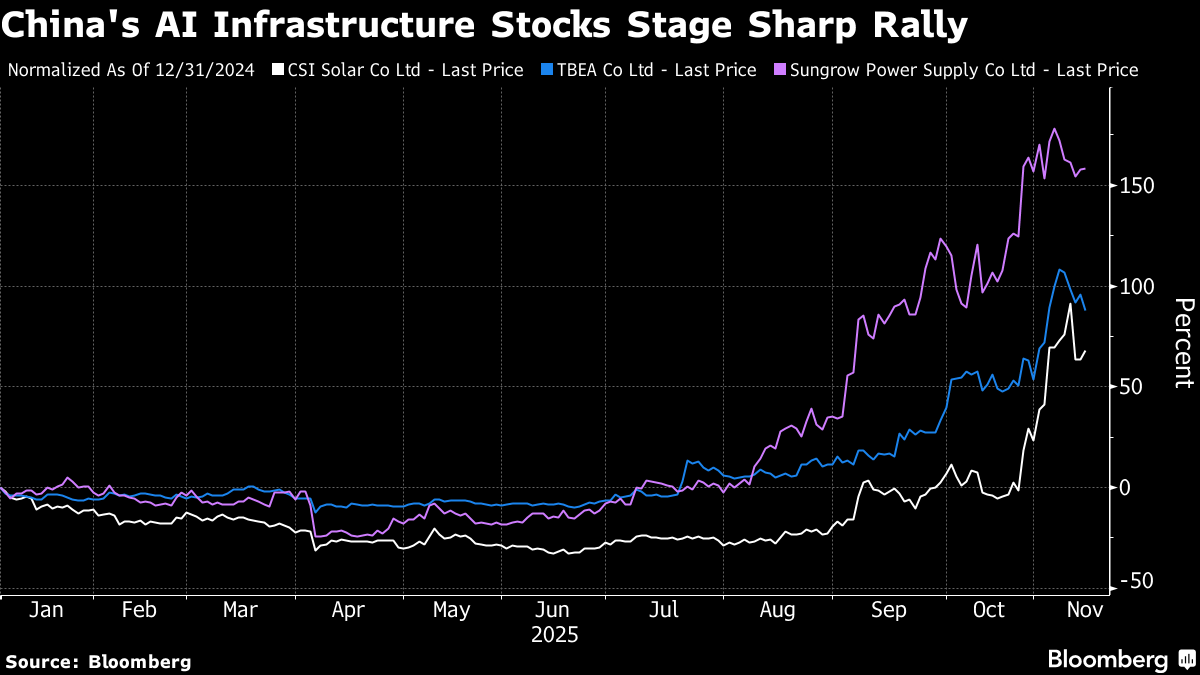
Image source: Energy Connects
Frequently Asked Questions
How can US investors buy mainland A-shares like CXMT?
US retail investors generally cannot buy mainland A-shares directly. However, you can access them through the Stock Connect program via a Hong Kong-based brokerage account or by purchasing ETFs that hold A-shares, such as the ASHR or DRGN ETFs. Some institutional-grade brokers like Interactive Brokers also provide access to the Northbound Stock Connect link.
What is the Chinese equivalent of Nvidia?
There is no single equivalent, but the market is split between CXMT (for memory), SMIC (for foundry/manufacturing), and Cambricon Technologies (for AI accelerator chips). While these companies currently lag behind Nvidia in raw performance, they are the primary beneficiaries of China's domestic substitution policy.
Are Chinese AI stocks safe from delisting in 2026?
The risk has decreased since the PCAOB (Public Company Accounting Oversight Board) gained access to audit papers in 2022, but it has not vanished. Geopolitical tensions remain a "wildcard." This is why many experts recommend holding the Hong Kong (HKEX) versions of these stocks rather than the US ADRs.
Which company has the most AI patents in China?
Baidu and Tencent consistently rank among the top globally for AI patent filings. Baidu, in particular, leads in deep learning and autonomous driving patents, while Tencent holds a significant portfolio in computer vision and AI for gaming/social media applications.
Is it better to buy Baidu or Alibaba for AI growth?
Baidu is often considered the "purest" AI play because a larger percentage of its future valuation is tied to ERNIE and Apollo Go. Alibaba is a more diversified bet on the broader digital economy, where AI acts as an "accelerant" for its existing cloud and e-commerce businesses. For high-conviction AI exposure, Baidu is typically the preferred choice.
The Bottom Line: Key Takeaways for 2026
- Prioritize Hardware: The "Hard Tech" sector, led by companies like CXMT, is currently the top priority for state support and institutional capital.
- Mitigate Delisting Risk: Whenever possible, purchase Hong Kong-listed shares (HKEX) instead of US ADRs to avoid regulatory uncertainty.
- Watch the "Physical AI" Space: Companies like Xiaomi are successfully integrating AI into hardware (EVs and wearables), creating a tangible path to monetization.
- Verify AI Claims: Use CSRC filings and R&D-to-revenue ratios to distinguish between genuine tech leaders and "concept-only" hype stocks.
- Monitor the Parameter Race: Baidu’s ERNIE 5.0 remains a benchmark for Chinese LLM capability, but watch for Alibaba’s open-source Qwen to dominate developer mindshare.
- Accept Volatility: Chinese AI stocks offer a significant valuation discount compared to US peers, but they come with higher geopolitical and regulatory risks.
For investors looking to enter this market, the most prudent next step is to review your current brokerage's access to the Hong Kong Stock Exchange and begin diversifying away from US-listed ADRs into dual-listed ordinary shares.