Is Sprint Mobile Still in Business and What Happened to Your Account?
For decades, Sprint was a titan of the American telecommunications industry, known for its bold yellow branding and its "pin drop" clarity commercials. However, the landscape of mobile technology shifted rapidly, leading to one of the most significant corporate consolidations in U.S. history. If you are a former customer or someone who recently found an old Sprint-branded device in a drawer, you may be wondering what remains of the company today.
As of mid-2026, the transition is complete. The Sprint name exists only in the history books and on legacy hardware. This article explores the timeline of the merger, the technical reasons behind Sprint's decline, and practical steps for anyone still dealing with legacy Sprint accounts or devices.
Image source: The Mobile Report
The Timeline of the Sprint and T-Mobile Merger
The path to the merger was long and fraught with regulatory hurdles. The $26 billion deal was first announced in 2018 but faced intense scrutiny from the Department of Justice and various state attorneys general who feared a reduction in competition would lead to higher prices for consumers.
-
April 1, 2020: The Legal Completion
After winning a major court battle against a coalition of states, T-Mobile officially completed its acquisition of Sprint. At this moment, Sprint became a wholly-owned subsidiary of T-Mobile US, though the brands continued to operate separately for a few months.
-
August 2, 2020: The Brand Retirement
This date marked the official end of Sprint as a consumer-facing entity. Thousands of Sprint retail stores across the country were rebranded to "T-Mobile Magenta" overnight. Marketing shifted entirely to the T-Mobile brand, and new customers could no longer sign up for Sprint-branded plans.
-
June 30, 2022: The CDMA Network Sunset
Sprint’s legacy 3G CDMA network, which powered millions of older devices, was officially shut down. This was a critical technical milestone, as it forced the retirement of many older handsets that were not compatible with T-Mobile’s GSM-based LTE and 5G networks.
-
Summer 2023: The Final Billing Migration
While the brand died in 2020, the "back-end" systems took years to merge. In the summer of 2023, the final batch of Sprint customers was moved to T-Mobile’s unified billing system. The Sprint app and website were officially shuttered, redirecting all traffic to T-Mobile.com.
According to official T-Mobile merger updates, the goal was to combine Sprint’s mid-band spectrum with T-Mobile’s low-band assets to create a leading 5G network. By 2026, this integration is considered a cornerstone of T-Mobile's current market position.
What Happened to Existing Sprint Customer Plans and Billing?
One of the biggest concerns during the merger was the fate of legacy Sprint plans. Many users were on "Unlimited Freedom" or "Tax-Inclusive" plans that offered specific perks like Hulu subscriptions or Tidal access. As part of the merger agreement, T-Mobile promised a three-year price guarantee, vowing not to raise rates on existing Sprint plans for at least 36 months.
That guarantee officially expired in 2023. Since then, many former Sprint customers have seen their plans evolve. While T-Mobile has maintained many of the core features of legacy plans, some perks have been swapped for T-Mobile equivalents (such as "Netflix on Us" replacing other streaming bundles). The "Sprint Select" program was launched to incentivize users to move to modern T-Mobile plans, often offering device credits in exchange for migrating away from legacy Sprint billing codes.
Sprint Plan Names vs. T-Mobile Equivalents
| Legacy Sprint Plan | Current T-Mobile Equivalent | Key Change Noted by Users |
|---|---|---|
| Sprint Unlimited Freedom | T-Mobile Go5G / Magenta | Hulu subscription often replaced by Netflix or Apple TV+. |
| Sprint Kickstart ($15-$25) | T-Mobile Unlimited Talk & Text | Price largely honored, but 5G access requires a T-Mobile SIM. |
| Sprint Flex Lease | Equipment Installment Plan (EIP) | Lease-to-own transitioned to standard 24-month financing. |
| Sprint Military / Senior | Go5G Military / 55+ | Expanded benefits and international roaming features. |
How to Access Your Legacy Sprint Account Today
If you are looking for your old Sprint bill or trying to manage a line that was originally Sprint, you can no longer use the Sprint website. As of 2026, the Sprint.com domain redirects entirely to T-Mobile. To access your account, you must follow these steps:
- Create a T-Mobile ID: If you haven't already, you must register your phone number on the T-Mobile website. Your old Sprint credentials will not work on the new portal.
- Download the T-Life App: T-Mobile has rebranded its primary account management app to "T-Life" (formerly the T-Mobile app). This is where you can view billing history, pay your bill, and manage add-ons.
- Check for "Sprint Select" Status: Some accounts may still be flagged as "Sprint legacy" in the system, which can occasionally limit certain self-service options. If you cannot change your plan online, you may need to contact a representative.
For customer support, the old Sprint numbers (like *2) now route directly to T-Mobile’s "Team of Experts." You can reach support by calling 1-800-937-8997. According to Wikipedia's record of the Sprint Corporation, the customer service infrastructure was one of the first things to be unified to ensure a consistent brand experience.
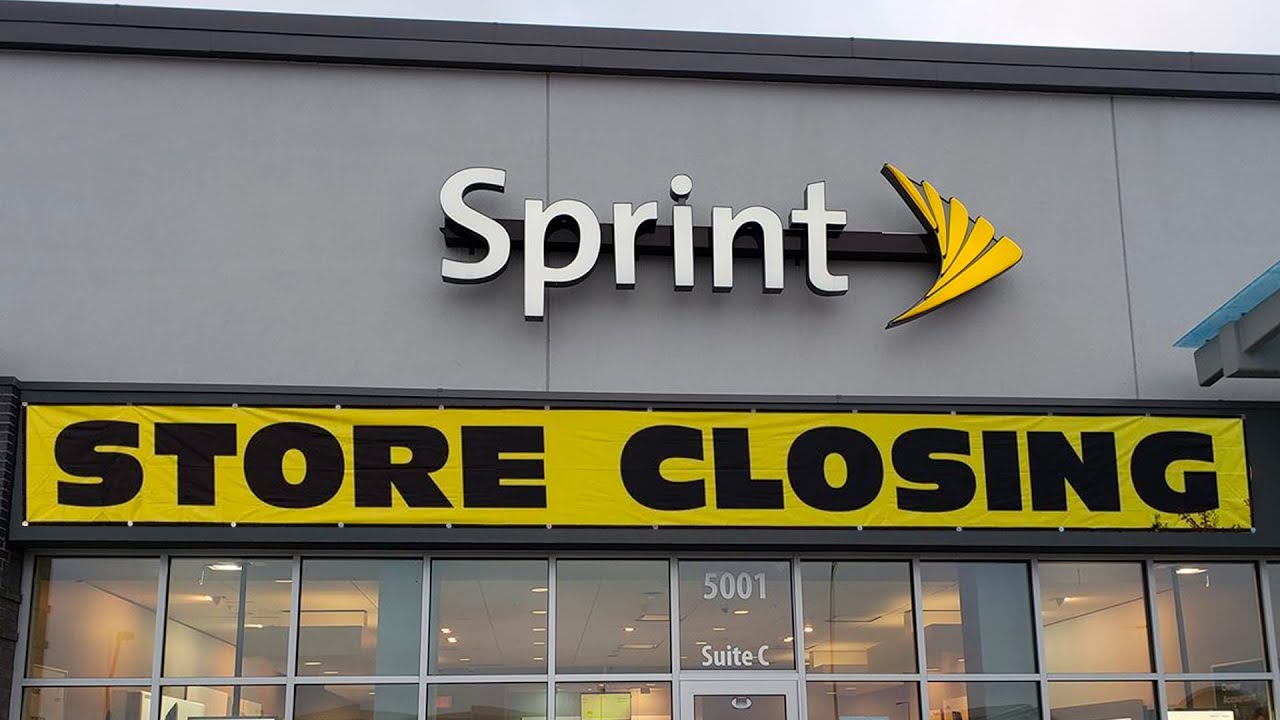
Image source: YouTube
Can You Still Use a Sprint-Branded Phone or SIM Card?
This is where things get technically complex. Sprint operated on a CDMA (Code Division Multiple Access) network, while T-Mobile uses GSM (Global System for Mobile Communications) and LTE/5G. Because these two technologies are fundamentally incompatible, the hardware requirements for former Sprint users have changed significantly.
The Network Technology Shift
Most Sprint phones manufactured before 2018 were designed specifically for CDMA towers. When T-Mobile shut down the Sprint towers, these devices lost their ability to make calls or use data unless they supported "Voice over LTE" (VoLTE) on T-Mobile’s specific frequency bands. If you have an old Sprint phone that does not support VoLTE, it is essentially a "WiFi-only" device today.
The "Zombie" Network Header
A common point of confusion for users in 2026 is seeing the word "Sprint" in the top corner of their phone screen. This is often referred to as a "zombie" network header. It occurs because the SIM card or the phone's internal software is still programmed to display the Sprint name, even though the device is actually connected to a T-Mobile tower. To fix this, you typically need to update your carrier settings or replace your SIM card.
SIM Card Compatibility
If you are still using an old yellow Sprint SIM card, you are likely missing out on the full capabilities of the 5G network. T-Mobile requires an R15 SIM card (or an eSIM) to access the "Standalone 5G" (SA) network. Using an old Sprint SIM can lead to dropped calls, slower data speeds, and poor battery life as the phone constantly searches for defunct Sprint frequencies.
How to Unlock an Old Sprint Device for Other Carriers
Unlocking an old Sprint device in 2026 can be a challenge. Because Sprint’s original "unlocking servers" were taken offline during the merger, traditional automated requests often fail, especially for older iPhones (models 5s through 7).
If you have a paid-off Sprint device that is still locked, you must contact T-Mobile customer support directly. They have a specialized tool to manually whitelist legacy Sprint IMEIs. You will need to provide the original account holder's information or proof of purchase. Community wisdom from platforms like Reddit suggests that persistence is key; if the first representative says it's impossible, ask to be transferred to the "Legacy Sprint Migration Team."
Why Did Sprint Fail as an Independent Company?
Sprint's journey from a leading innovator to an acquisition target is a cautionary tale of technical debt and strategic miscalculations. At its peak, Sprint was valued at over $80 billion, but by the time of the merger, it was struggling to maintain its subscriber base.
The WiMAX Fiasco
In the late 2000s, the world was racing toward 4G. While Verizon and AT&T bet on LTE (Long Term Evolution), Sprint decided to go a different route by backing WiMAX. This decision proved disastrous. WiMAX failed to gain global traction, leaving Sprint with a network that was incompatible with most international devices and significantly less efficient than LTE. Sprint was eventually forced to abandon WiMAX and build an LTE network from scratch, putting them years behind their competitors.
The GSM Irony
There is a fascinating historical irony in Sprint's demise. In the mid-1990s, Sprint actually launched one of the first GSM networks in the U.S., known as Sprint Spectrum. However, they chose to sell off that GSM infrastructure to focus on CDMA. The company that bought that infrastructure? VoiceStream, which eventually became T-Mobile. In a sense, Sprint sold the very technology that would one day be used to replace its own network.
Technical Debt
By 2015, Sprint was trying to manage three disparate networks: the aging CDMA network, the failing WiMAX network, and a burgeoning LTE network. The capital required to maintain all three was astronomical, leading to a lack of investment in new towers and coverage expansion. This "technical debt" made it impossible for Sprint to compete with the coverage maps of Verizon or the "Un-carrier" marketing blitz of T-Mobile.

Image source: YouTube
The Physical and Corporate Legacy of a Telecom Giant
While the Sprint brand is gone, its physical and corporate legacy remains visible. The company was founded in 1899 as the Brown Telephone Company in Abilene, Kansas, originally intended to provide landline service to rural areas that larger companies ignored. Over a century, it grew into a global powerhouse.
The most visible symbol of Sprint's former might was the Overland Park Campus in Kansas. This massive, 200-acre headquarters was once the workplace for thousands of employees. Following the merger, T-Mobile sold the campus to Occidental Management in 2020. While T-Mobile still leases some space there, the campus has been transformed into a multi-tenant office park, reflecting the decentralized nature of modern corporate work.
Culturally, Sprint is remembered for its iconic marketing. The "Pin Drop" campaign of the 1980s was a significant advancement in advertising, emphasizing the clarity of fiber-optic lines. Later, the "Framily" plans and the "Can you hear me now?" guy (who famously switched from Verizon to Sprint) became staples of American pop culture. While the brand has been absorbed, the 2.5GHz spectrum that Sprint owned is now the "secret sauce" that allows T-Mobile to claim a top position in 5G speed rankings.
Frequently Asked Questions
Is my Sprint email address still active?
Can I still pay my bill at a Sprint store?
What happened to Sprint’s long-distance landline service?
Is Sprint still in business in other countries?
Can I use a Sprint phone on Mint Mobile or Boost Infinite?
Key Takeaways: The End of Sprint
While the Sprint name has vanished from the wireless landscape, its impact on how we connect remains. Here is the bottom line for 2026:
- Sprint is 100% defunct as an independent brand; it is now entirely part of T-Mobile US.
- All billing and support are handled through T-Mobile’s website, the T-Life app, or T-Mobile retail stores.
- Legacy Sprint plans have largely been migrated to T-Mobile equivalents, though some price-point protections remain for long-term users.
- Old CDMA hardware is mostly obsolete; modern 5G service requires a T-Mobile R15 SIM and a VoLTE-compatible device.
- Unlocking Sprint devices requires a manual request to T-Mobile customer service, as the original Sprint servers are inactive.
- The Sprint spectrum (2.5GHz) is the foundation of T-Mobile’s current 5G performance dominance.
If you still have a Sprint-branded device or account, your first step should be visiting a T-Mobile store to ensure your hardware and SIM card are fully optimized for the modern network.