
The Nike Journey Run is a high-value entry-level trainer designed for short, easy miles and all-day walking. While Nike markets it as "super-soft," lab data reveals a firmer, more stable ride than expected. It stands out as a top choice for beginners and workers on their feet, provided you account for its aggressive toebox taper.
In the increasingly expensive world of performance footwear, the Nike Journey Run arrives as a refreshing alternative for the budget-conscious consumer. Positioned below the flagship Pegasus and the premium Invincible lines, this shoe targets the "everyday athlete"—someone who might hit the treadmill for twenty minutes before heading to a retail shift or a long walk with the kids. According to Nike's official product details, the shoe is engineered specifically to make "punishing pavements" feel more manageable through its high-stack ComfiRide foam.
However, the budget category is often a minefield of compromises. To understand if the Journey Run is a genuine performance bargain or simply a stylish sneaker in running shoe's clothing, we have to look past the marketing. This review explores the "Firmness Paradox," the technical specifications that define its ride, and how it stacks up against Nike's other entry-level offerings like the Winflo 11.
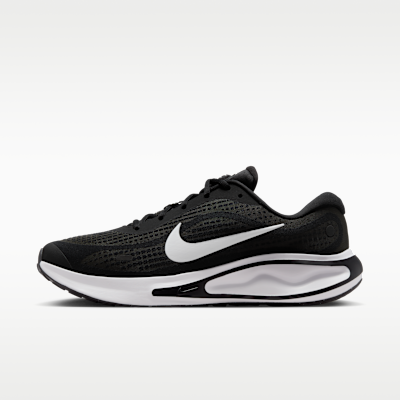
The primary marketing hook for the Nike Journey Run is the "ComfiRide" foam. Nike describes this material as "super-soft," leading many potential buyers to expect a cloud-like sensation similar to the ZoomX foam found in the Invincible 3. However, independent lab testing tells a different story. According to RunRepeat's durometer measurements, the foam registers at 46.5 AC. To put that in perspective, the average running shoe foam measures around 35.6 AC. This means the Journey Run is actually about 30% firmer than the industry average.
This creates what we call the "Firmness Paradox." When you first put the shoe on, it *looks* like it should be incredibly squishy because of the 33mm heel stack. But once you start moving, the foam feels dense and supportive rather than bouncy. For a beginner, this isn't necessarily a bad thing. A firmer foam often provides better stability, which is crucial for runners whose muscles aren't yet conditioned for the instability of ultra-soft "super foams."
The ride is predictable and consistent. You won't feel the "bottoming out" sensation that sometimes occurs in cheap, soft shoes. Instead, the ComfiRide foam offers a protective barrier that absorbs impact without letting your foot sink too deep. If you are looking for a shoe that feels like a trampoline, this isn't it. But if you want a shoe that feels reliable and won't leave your arches aching after a two-mile jog, the Journey Run ranks among the top options in its price bracket.
"The Journey Run is a classic example of stack height vs. foam density. It has the volume of a plush shoe, but the chemistry of a stable trainer."
Understanding the geometry of a shoe is essential for predicting how it will perform on the road. The Nike Journey Run follows the modern trend of "maximalist" aesthetics, even if its performance is more traditional. Here is the technical breakdown based on recent lab data and manufacturer specifications:
The weight is one area where the budget nature of the shoe becomes apparent. At over 11 ounces for a men's standard size, it is notably heavier than the Pegasus 41. This extra weight comes from the denser ComfiRide foam and the generous use of rubber on the outsole. While you might feel this weight during a long run, it contributes to the shoe's overall durability and "planted" feel on the treadmill.
The 9mm drop is a "sweet spot" for most runners. It provides enough heel lift to reduce strain on the Achilles tendon without feeling like you are wearing high heels. This makes it a versatile choice for both walking and light running, as it accommodates various foot strike patterns.
Fit is where the Nike Journey Run becomes polarizing. While the upper is made of a high-quality engineered mesh that feels premium to the touch, the internal geometry is specific. Nike has utilized "Plush Touch Points" on the tongue and collar to minimize irritation, but the actual shape of the shoe requires careful consideration.
The upper is one of the highlights of this shoe. It is surprisingly breathable for a budget model, featuring a dual-layer mesh that allows for significant airflow. The "Waterfall Lining" at the heel is another thoughtful addition; it curves away from the Achilles to prevent the rubbing and blistering often associated with stiffer heel counters. This makes the shoe exceptionally comfortable for those who wear "no-show" socks.
If you have wide feet, you must proceed with caution. Lab measurements show that while the midfoot width is a standard 96.3mm, the toebox tapers aggressively to just 69.8mm at the big toe. This is significantly narrower than many other neutral trainers. For runners with "square" foot shapes or those prone to bunions, this taper can cause pinching during the toe-off phase of your stride.
Sizing Recommendations:
Nike’s budget and mid-tier lineup can be confusing. The Journey Run sits at the bottom of the price scale, but how does it compare to the shoes just above it? This decision framework helps you identify which model fits your specific needs.
| Feature | Nike Journey Run | Nike Winflo 11 | Nike Pegasus 41 |
|---|---|---|---|
| MSRP | $90 | $105 | $140 |
| Foam Type | ComfiRide (Firm) | Cushlon 3.0 (Softer) | ReactX (Bouncy) |
| Best Use | Walking / Short Jogs | Daily Training | Performance / Speed |
| Weight (Men's) | 11.4 oz | 10.4 oz | 10.1 oz |
| Tech | High Stack / Regrind | Full-length Air | Dual Air Zoom Units |
As the table illustrates, the Winflo 11 is often considered a superior "pure" running shoe for just $15 more, as it includes a full-length Air unit for better responsiveness. However, the Journey Run is widely regarded as a top-tier choice for lifestyle and walking because of its simpler construction and aesthetic versatility. The Pegasus 41 remains the gold standard for serious runners, but at $140, it is a significant investment compared to the Journey Run.
While Nike markets this as a running shoe, the community feedback from Reddit and retail forums suggests its true strength lies elsewhere. Nurses, retail workers, and hospitality staff have adopted the Journey Run as a "workhorse" for long shifts. There are three specific reasons why this shoe excels in a professional standing environment:
According to Running Shoes Guru, the shoe requires a brief break-in period. The midsole can feel a bit stiff out of the box, but after about 10-15 miles of walking, the foam softens slightly, reaching its optimal comfort level. For workers, this means the shoe actually gets better after the first week of use.
If you do intend to use the Journey Run for its namesake activity, it is important to manage expectations regarding terrain. This is strictly a road and treadmill shoe. The outsole features Nike's "Regrind" rubber, which provides excellent traction on smooth, dry pavement and gym belts. However, the high stack height and lack of aggressive lugs make it a poor choice for gravel paths or light trails.
On the road, the shoe feels "flat" if you try to push the pace. In our assessment, once you drop below a 10-minute mile pace, the 54.7% energy return becomes noticeable. You aren't getting much "pop" back from the ground. It is a shoe designed for "easy miles"—those runs where the goal is simply to move, not to set a personal record. For beginners doing a Couch to 5K program, this performance profile is perfectly adequate.
Nike has made a concerted effort to include sustainable materials in their budget lines. The Journey Run is composed of at least 20% recycled content by weight. The most visible part of this initiative is the **Regrind rubber** outsole. This material is created from recycled gym flooring and manufacturing scraps, giving the outsole a unique speckled appearance.
Beyond the environmental benefits, Regrind rubber is exceptionally durable. Because it is denser than the blown rubber used on high-end racing flats, it resists abrasion very well. You can expect to get 300-400 miles out of the outsole before seeing significant wear. The ComfiRide foam is also likely to outlast softer foams, as dense EVA-based materials are less prone to "packing out" (losing their cushioning) over time.
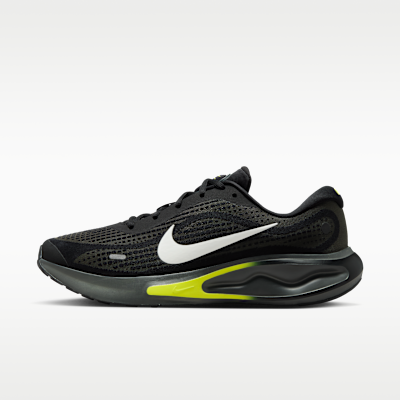
The Nike Journey Run is generally not recommended for those with wide feet unless you can find the specific "Extra Wide" version. Lab tests show an aggressive taper in the toebox, narrowing to just 69.8mm. This can feel restrictive for runners who prefer a natural toe splay. If you have a standard width foot but prefer more room, consider sizing up by a half-size to compensate for the narrow front.
No, the Nike Journey Run is not waterproof. It features an engineered mesh upper designed for maximum breathability. While this is excellent for keeping your feet cool during summer runs or gym sessions, it allows water to penetrate almost instantly in rainy conditions. If you frequently run in the rain, you may want to look for a shoe with a GORE-TEX (GTX) lining.
Yes, the Journey Run is actually a strong contender for general gym use. Because the ComfiRide foam is firmer and more stable than premium running foams, it provides a solid base for lifting weights or performing lateral movements in a HIIT class. The high stack height might feel a bit tall for heavy squats, but for general fitness, it is a very versatile hybrid option.
The two shoes are very different despite both having high stack heights. The Invincible uses ZoomX foam, which is incredibly soft, bouncy, and expensive. The Journey Run uses ComfiRide foam, which is firm, stable, and budget-friendly. Think of the Invincible as a luxury cruiser and the Journey Run as a reliable daily commuter. The Journey Run is much more stable but lacks the "fun" energy return of the Invincible.
Yes, many users and reviewers report that the Journey Run feels a bit stiff right out of the box. The dense foam and thick rubber outsole take about 10 to 20 miles of use to "open up." Once broken in, the midsole becomes slightly more flexible and the upper molds better to the shape of your foot. Don't judge the comfort solely on your first five minutes wearing them in the store.
The Nike Journey Run is a significant advancement for Nike's budget category, offering a stylish and durable option for those who don't need the high-tech bells and whistles of a $160 marathon shoe. It successfully bridges the gap between a dedicated runner and a lifestyle sneaker.
If you are a beginner runner looking for a reliable shoe for 2-3 mile jogs, or a professional seeking a comfortable work sneaker, the Nike Journey Run is a highly recommended investment that balances cost and quality effectively.
