
As of 2026, the Toyota Tacoma and Ford Ranger remain the primary contenders in the midsize truck segment. While their exterior footprints are nearly identical, the Ford Ranger typically offers higher raw utility with a 7,500 lb towing capacity and superior rear-seat legroom. The Toyota Tacoma stands out for its configuration variety, offering both 5-foot and 6-foot beds, and maintains a slight edge in off-road geometry for trail enthusiasts.
Choosing between the Toyota Tacoma and the Ford Ranger often comes down to more than just brand loyalty. In the 2026 landscape, these trucks have evolved into sophisticated machines that push the boundaries of what "midsize" actually means. According to recent assessments by PickupTruckTalk, the choice often hinges on whether you prioritize a "daily driver" experience or a dedicated "dirt" machine.
This comparison dives deep into the physical dimensions, interior packaging, and real-world utility of both vehicles. We will look beyond the spec sheet to help you determine which truck will actually fit in your driveway and accommodate your family's needs.
At a glance, the Tacoma and Ranger look remarkably similar in size. However, the nuances in their dimensions affect everything from highway stability to how easily you can navigate a crowded grocery store parking lot. The 2026 Ford Ranger is primarily offered in a SuperCrew configuration with a 5-foot bed, while the Tacoma continues to offer more flexibility with its XtraCab and Double Cab options.
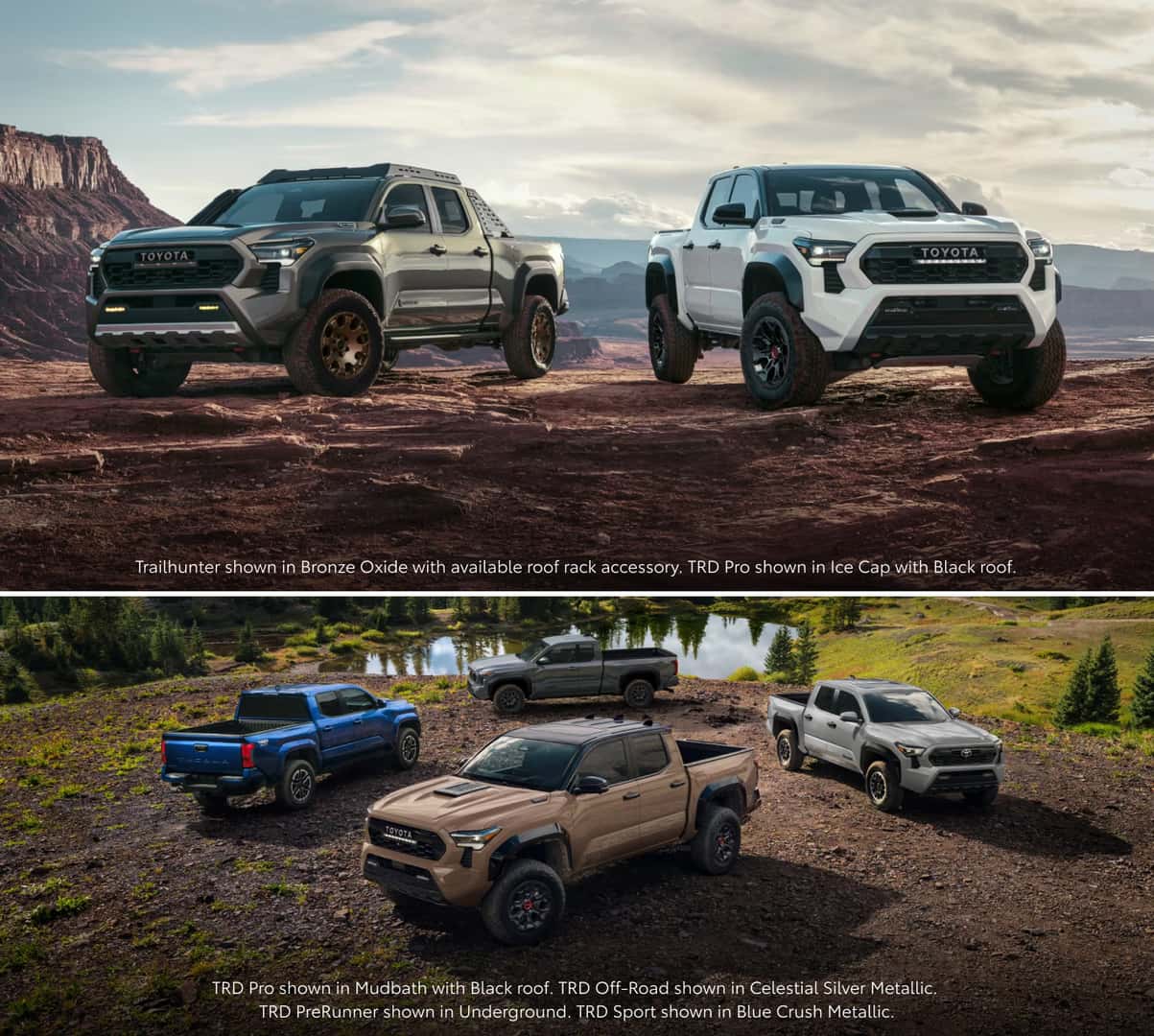
The wheelbase is a critical metric here. A longer wheelbase, like that found on the Tacoma Double Cab with a 6-foot bed, provides a smoother ride on the highway but increases the turning circle. Conversely, the Ranger’s tighter wheelbase makes it slightly more agile in urban environments. According to data from Edmunds, both trucks have turning circles hovering around 42 feet, making them significantly easier to handle than their full-size siblings.
| Dimension | Toyota Tacoma (Double Cab) | Ford Ranger (SuperCrew) |
|---|---|---|
| Overall Length | 213.0 - 226.2 inches | 210.6 inches |
| Overall Width | 76.9 - 80.1 inches | 75.5 - 79.0 inches |
| Overall Height | 73.9 - 74.6 inches | 73.9 - 75.9 inches |
| Wheelbase | 131.0 - 145.1 inches | 128.7 inches |
| Turning Circle | 42.2 ft | 42.5 ft |
One notable difference is the width. The Tacoma, especially in TRD Pro or Trailhunter trims, features wider fender flares that can push the width past 80 inches. If you have a narrow driveway or a tight garage door, the Ranger’s slightly narrower body might be a deciding factor. However, for those seeking a planted stance for off-roading, the Tacoma’s wider track is a significant advancement in stability.
The most common question for new truck buyers isn't about horsepower—it's about the garage. A standard modern single-car garage is typically 20 feet deep (240 inches). While both trucks are technically shorter than 240 inches, the "walk-around" space is what matters for daily usability.
If you opt for a Toyota Tacoma with the 6-foot bed, the total length reaches approximately 226 inches. In a 240-inch garage, this leaves you with only 14 inches of total clearance. This means you likely cannot walk behind the truck with the garage door closed. The Ford Ranger, at 210.6 inches, is much more "garage-friendly," leaving nearly 30 inches of space—enough to comfortably walk around the vehicle or store a lawnmower in front of it.
Height is another consideration. With modern shark-fin antennas and off-road lighting, both trucks can approach 76 inches in height. Most standard garage doors are 7 feet (84 inches) tall, providing ample clearance, but older homes with 6.5-foot doors may find the fit uncomfortably tight, especially with a leveled suspension or larger tires.
Raw numbers rarely tell the whole story of interior comfort. While the Tacoma and Ranger have similar legroom specs on paper, the way that space is packaged differs significantly. The Ford Ranger has long been noted for its clever interior packaging. According to community feedback and expert reviews, the Ranger utilizes "scalloped" front seatbacks and indents in the headliner to maximize space for taller passengers.
In the Toyota Tacoma, the seating position is notably different. Historically, the Tacoma had a "legs-out" seating position that felt more like a car than a truck. The 2026 model has improved this with higher seat mounts, but it still feels more intimate than the Ranger. For families, the distance from the rear seatback to the front seat is the most critical measurement.
If you are installing a rear-facing child safety seat, the Ranger generally offers a slight advantage. The scalloped seats allow the child seat to "nestle" slightly further forward without forcing the front passenger into the dashboard. In the Tacoma, a bulky rear-facing seat may require the front passenger to move their seat forward significantly, which can be uncomfortable for adults over 6 feet tall.
However, the Tacoma counters with superior interior storage solutions. The XtraCab configuration (available on lower trims) removes the rear seats entirely in favor of lockable storage bins, a notably innovative solution for solo drivers or couples who prioritize gear security over passenger capacity.
Utility is the heart of the midsize truck segment. The Toyota Tacoma and Ford Ranger take different approaches to bed construction and accessibility. The Tacoma features a sheet-molded composite (SMC) bed, which is inherently rust-proof and highly resistant to dents. This material is a top-tier choice for those who haul abrasive materials like gravel or cinder blocks without a bed liner.
The Ford Ranger uses a traditional high-strength steel bed but adds features that enhance daily usability. One of the most praised additions is the integrated side-step located behind the rear wheel, allowing easy access to the bed without lowering the tailgate. According to Way Scarff Ford, the Ranger's bed width between the wheel wells is 48.2 inches, which is a high standard for the segment, though still just shy of fitting a 4x8 sheet of plywood flat.
Bed Features Comparison:
If you plan to tow a boat or a travel trailer, the Ford Ranger is widely considered one of the best options in the midsize class. It boasts a maximum towing capacity of 7,500 lbs across most of its lineup. The Toyota Tacoma, while capable, typically maxes out between 6,500 and 6,800 lbs depending on the trim and powertrain. For a 7,000 lb load, the Ranger is the clear choice for maintaining a safety margin.
Payload is another area where the Ranger leads. With a peak payload capacity of up to 1,905 lbs, it can carry significantly more gear in the bed than the Tacoma, which peaks around 1,705 lbs. This difference is vital for overlanders who add heavy steel bumpers, winches, and roof-top tents.
A unique "real-world" detail identified by owners is the Tacoma's hitch receiver design. Due to the thickness of the rear bumper and the depth of the receiver, many standard locking hitch pins are too short to engage the lock. If you are switching from a Ranger or a full-size truck to a Tacoma, you may need to purchase a "long-span" hitch pin to secure your trailer ball mount.
It is also important to note that hybrid powertrains—like the Tacoma's i-FORCE MAX—often have lower payload ratings than their gas-only counterparts due to the weight of the battery pack. Always check the specific door jamb sticker of the vehicle you are considering to verify its actual capacity.
The "midsize" truck of 2026 is roughly the same size as the "full-size" trucks of the late 1990s. This "size creep" has made these vehicles more capable but also more difficult to park. A 2018 Toyota Tacoma was notably narrower and shorter than the current 2026 model.
Midsize trucks were still focused on maneuverability. The Tacoma was roughly 70 inches wide, making it easy to thread through tight trails.
Increased safety regulations and consumer demand for tech led to wider pillars and larger crumple zones, pushing widths toward 75 inches.
The current generation of both trucks has embraced a "wide-body" aesthetic. With widths reaching 80 inches, these trucks now require the same parking care as a Ford F-150 or Toyota Tundra.
This growth is largely driven by consumer demand for interior comfort. As more buyers use these trucks as primary family vehicles, manufacturers have prioritized cabin volume, leading to the larger exterior dimensions we see today.
While exterior size can be a hindrance in the city, it is a benefit on the trail when managed correctly. The Toyota Tacoma TRD Pro is a top-tier choice for off-roading, offering up to 11.5 inches of ground clearance. The Ford Ranger Raptor, while exceptionally strong in high-speed desert running, offers slightly less clearance at 10.7 inches, according to data from Haley Auto.
Approach and departure angles are where the Tacoma often shines. Its shorter front overhang allows it to climb steeper obstacles without scraping the bumper. However, the Ranger Raptor's sophisticated Fox Racing Shox and wider track provide a level of high-speed stability that few competitors match. If your off-roading involves tight, technical rock crawling, the Tacoma's geometry is generally preferred. If you prefer high-speed sand dunes, the Ranger Raptor sets a high standard.
In terms of overall footprint, they are nearly identical. The Ford Ranger is slightly shorter in length than a long-bed Tacoma but offers more interior passenger volume. The Tacoma can be configured to be longer (up to 226 inches) if you choose the Double Cab with the 6-foot bed, whereas the Ranger is more standardized around the 210-inch mark.
The Ford Ranger is generally easier to fit in a standard 20-foot garage. Its 210.6-inch length leaves about 2.5 feet of clearance for walking around the vehicle. The Toyota Tacoma with a 5-foot bed is similar, but the 6-foot bed version is very tight and may not allow you to close the garage door in older, shallower garages.
Technically, most 2026 Tacoma models are rated for 6,500 lbs. Towing a 7,000 lb boat would exceed the manufacturer's recommended limit, which could lead to safety issues and voided warranties. The Ford Ranger, with its 7,500 lb rating, is the better choice for loads in the 7,000 lb range.
Yes, but it is a tight fit. Because the Tacoma's cabin is slightly more compact than the Ranger's, a rear-facing seat often requires the front passenger seat to be moved forward. Taller passengers may find this restrictive. The Ranger's scalloped front seats provide a bit more "knee room" for this specific scenario.
The design of the Tacoma's rear bumper and the placement of the hitch receiver are deeper than those on many other trucks. This means standard-length locking pins often cannot reach far enough through the receiver to engage the lock. Owners typically need a "long-span" pin (usually 3.5 inches or longer) to ensure a secure fit.
Deciding between the Toyota Tacoma and Ford Ranger requires balancing your need for interior comfort against your requirements for bed utility and off-road capability. Both trucks represent a significant advancement in the midsize segment, but they cater to slightly different lifestyles.
Ultimately, the best way to decide is to bring your largest piece of gear or your child's car seat to the dealership and see how it fits in the real world.
