What Is Happening in IoT Security News Today and How to Protect Your Network
As of late 2026, IoT security has shifted from digital data theft to physical safety risks. Key developments include the rise of the Tengu botnet, which uses hardware watchdogs for persistence, and the systematic hijacking of IP cameras by foreign intelligence to monitor NATO logistics. Organizations are moving toward AI-native firmware protection and adopting the new MITRE Embedded Systems Threat Matrix (ESTM) to secure critical infrastructure.

Image source: Trigyn Technologies
Executive Summary: The State of IoT Security in August 2026
The landscape of Internet of Things (IoT) security has undergone a significant transformation as we enter the second half of 2026. While previous years focused heavily on preventing Distributed Denial of Service (DDoS) attacks and simple credential theft, the current environment is defined by kinetic impact. The convergence of Operational Technology (OT) and consumer IoT has created a broader attack surface where vulnerabilities now translate directly into physical harm or national security breaches.
According to recent reports from SecurityWeek, the sophistication of malware targeting embedded systems has reached a new peak. We are no longer dealing with simple scripts; today's threats involve blockchain-based command and control (C2) structures and hardware-level persistence mechanisms that survive even factory resets. This evolution has forced a global shift in compliance, with new regulations like UN Regulation No. 155 mandating cybersecurity by design for connected vehicles.
For security professionals and business leaders, staying updated on "iot security news today" is no longer just about IT hygiene—it is about protecting the physical integrity of supply chains, healthcare systems, and critical infrastructure. This report breaks down the most pressing threats active in August 2026 and provides a technical framework for modern defense.
How Physical Safety Risks Are Redefining the 2026 Threat Landscape
The most alarming trend in recent months is the weaponization of IoT devices to cause physical disruption. As smart technology integrates more deeply into mobility and healthcare, the stakes of a successful exploit have shifted from financial loss to potential loss of life. This "kinetic IoT" era represents a top-tier challenge for security researchers and manufacturers alike.
Why Smart Wheelchairs and Autonomous Vehicles Are Now Primary Targets
Recent intelligence has highlighted critical vulnerabilities in mobility aids and autonomous transport. Specifically, researchers have demonstrated exploits involving WHILL smart wheelchairs, where unauthorized remote movement was achieved by bypassing local authentication protocols. This allows an attacker to take control of a user's physical movement, posing an immediate safety risk.
Similarly, the autonomous vehicle (AV) sector is facing a surge in sensor-based attacks. According to Dark Reading, adversaries are using laser-based interference to spoof LiDAR and camera sensors. By projecting specific light patterns, attackers can trick an AV's perception system into "seeing" non-existent obstacles or, more dangerously, ignoring real ones. These attacks do not require traditional network access, making them exceptionally difficult to detect using standard intrusion detection systems (IDS).
The Rise of Infrastructure Hijacking by Foreign Intelligence
Beyond individual safety, IoT devices are being leveraged as tools for geopolitical espionage. A major operation identified in early 2026 involved the systematic hijacking of thousands of IP cameras across Europe by Russian intelligence services. The goal was not to disrupt the cameras, but to use them as a persistent surveillance network to monitor NATO military logistics and weapons shipments destined for conflict zones.
These devices, often left with default credentials or unpatched firmware, provide a low-cost, high-reward entry point for state-sponsored actors. By compromising the "edge" of the network, intelligence agencies can maintain long-term visibility into physical movements that were previously shielded from satellite or traditional human intelligence.
Analyzing the New Breed of Persistent IoT Botnets
Botnets have evolved far beyond the Mirai variants of the past decade. The 2026 generation of IoT malware is designed for extreme persistence and resilience against takedown attempts by law enforcement and security firms.
How the Tengu Botnet Uses Hardware Watchdogs to Stay Alive
The Tengu botnet represents a significant advancement in malware persistence. Traditional malware resides in volatile memory (RAM), meaning a simple reboot clears the infection. Tengu, however, hijacks the device's hardware watchdog—a timer designed to automatically reboot the system if the software hangs. By integrating itself into the watchdog's reset cycle, Tengu ensures that if its process is killed, the hardware itself triggers a reboot that immediately re-executes the malware code from a hidden partition.
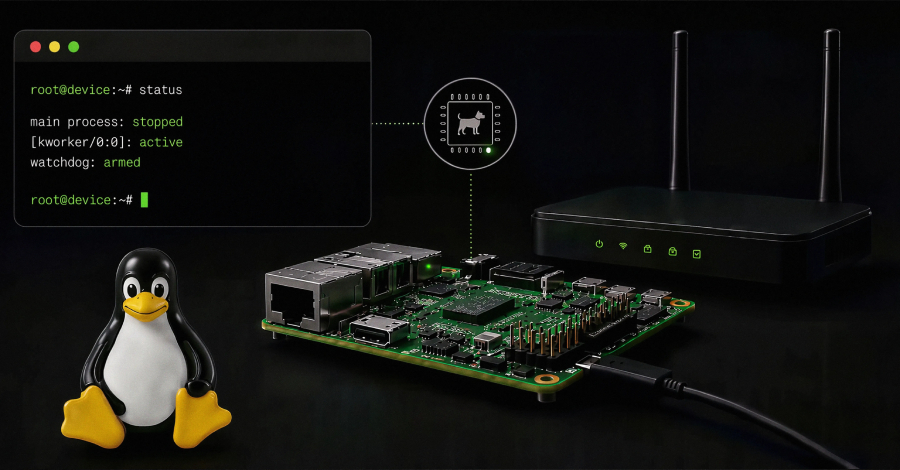
Image source: The Hacker News
Why the Dysphoria Botnet Is Nearly Impossible to Take Down
The Dysphoria botnet has gained notoriety for its use of blockchain-based Command & Control (C2) infrastructure. Instead of relying on static IP addresses or domain names that can be seized, Dysphoria uses decentralized name services. This means the instructions for the botnet are stored on a public ledger, making it virtually impossible for authorities to "pull the plug." As reported by The Hacker News, estimates for the Dysphoria botnet range from 200,000 to 239,000 infected devices, though researchers warn that these figures lack a clear de-duplication methodology and should be viewed as estimates.
The Broadside Botnet and the Growing Threat to Maritime Logistics
While many botnets target general consumer electronics, the Broadside botnet is specialized. It specifically targets TBK DVR devices commonly used in maritime logistics and shipping ports. By compromising the video surveillance and logging systems of cargo ships and port facilities, Broadside allows attackers to monitor—and potentially disrupt—global trade routes. This niche targeting highlights a shift toward "industrial-adjacent" IoT attacks that can have massive economic repercussions.
Data-Driven Insights into the 2026 Malware Surge
Objective data from the past year shows an unprecedented spike in IoT-targeted malware. The convergence of 5G connectivity and the proliferation of low-cost sensors has created a "perfect storm" for attackers. According to Zscaler Research, certain sectors have seen triple-digit growth in attack volume.
| Industry Sector | Malware Growth (2025-2026) | Primary Threat Vector |
|---|---|---|
| Education | +861% | Unsecured Campus IoT & Research Hardware |
| Energy & Utilities | +459% | Legacy SCADA/ICS Gateways |
| Healthcare | +224% | Connected Medical Imaging (MRI/CT) |
| Manufacturing | +111% | Industrial Sensors & Robotics |
The massive surge in the education sector is particularly noteworthy. Universities often maintain open network environments with thousands of student-owned IoT devices and legacy research equipment, making them a top choice for botnet recruitment. In contrast, the energy sector's growth is driven by state-sponsored actors seeking to establish persistence within critical infrastructure for future leverage.
Supply Chain Fraud and the Consumer-to-Proxy Pipeline
A growing concern in 2026 is the "pre-infected" supply chain. Consumers and small businesses are unknowingly purchasing devices that are compromised before they even leave the box. This creates a silent pipeline where home and office networks are turned into tools for cybercrime.
How Cheap Android TV Boxes Turn Home Networks into Dark Web Exit Nodes
The Fuyao operation is a prime example of this trend. Millions of low-cost Android TV boxes, sold through major online marketplaces, have been found to contain pre-installed malware. These devices function normally for the user but, in the background, they mimic mobile phones to perform ad fraud and turn the home's broadband connection into a SOCKS5 proxy. This allows dark web users to route their illegal traffic through a legitimate residential IP address, effectively hiding their identity from law enforcement.
The Impact of the SGP.32 eSIM Standard on Device Security
On the enterprise side, the adoption of the SGP.32 eSIM standard is a significant advancement. This standard allows for "device-first" IoT operations, where security credentials can be managed remotely and securely over cellular networks. While this improves operational efficiency, it also introduces new risks. If the remote management platform is compromised, an attacker could theoretically re-provision thousands of industrial sensors simultaneously. Organizations must ensure that their eSIM orchestration layers are protected with multi-factor authentication and strict zero-trust policies.
New Defensive Frameworks and AI-Native Security Solutions
As threats evolve, so must our defensive strategies. The industry is moving away from perimeter-based security toward "AI-native" protection that lives directly on the device firmware.
Moving Toward AI-Native Runtime Protection at the Firmware Level
Companies like Exein are leading a shift toward protecting embedded systems from within. By using AI-native runtime protection, these solutions can detect anomalous behavior at the firmware level—such as a sudden attempt to write to a protected memory region—and block it in real-time. This is a top-tier approach for devices that cannot be easily patched or that operate in remote environments where network-based security is impractical.
How the MITRE Embedded Systems Threat Matrix Differs from ATT&CK
For years, the MITRE ATT&CK framework has been the standard for IT security. However, it often fails to account for the unique hardware-level tactics used in IoT attacks. To bridge this gap, MITRE launched the Embedded Systems Threat Matrix (ESTM). The ESTM focuses on tactics like side-channel analysis, JTAG debugging exploits, and hardware-level persistence, providing a much-needed roadmap for securing critical embedded systems.
Focuses on enterprise IT environments, operating systems (Windows/Linux), and cloud services. Emphasizes lateral movement and data exfiltration.
Focuses on microcontrollers, firmware, and physical hardware interfaces. Emphasizes hardware persistence and sensor spoofing.
Practical Steps for Securing Unpatchable and Shadow IoT Devices
One of the most persistent problems in IoT security is the "unpatchable" device. Many manufacturers stop providing firmware updates long before the hardware reaches its end-of-life, leaving businesses with vulnerable equipment that cannot be fixed.
What to Do When Manufacturers Stop Supporting Your Hardware
A recent example involves Brother printers, where several critical vulnerabilities were discovered but no firmware updates were made available for older models. In these cases, the only viable strategy is network segmentation. By placing these "legacy" devices on a completely isolated VLAN with no access to the internet or the main corporate network, you can mitigate the risk of them being used as a pivot point for a larger attack.
How to Surface Shadow AI and Unauthorized Devices in the Office
The rise of "Shadow AI"—unauthorized AI-capable hardware brought in by employees—is a new frontier for IT teams. Whether it's a smart assistant or a specialized AI accelerator, these devices often bypass standard security checks. To combat this, organizations should implement continuous network discovery tools that can identify devices based on their MAC address signatures and traffic patterns, ensuring that no "dark" IoT device remains hidden on the network.
Frequently Asked Questions
What are the most recent IoT security breaches in 2026?
Is there an active cyber attack targeting IoT devices right now?
What is the CISA’s latest alert regarding IoT/ICS devices?
How does the Tengu botnet survive a system reboot?
Why are Android TV boxes considered a security risk?
What is the average cost of an IoT security breach?
Final Thoughts: Building a Resilient IoT Strategy for the Future
The IoT security landscape of 2026 demands a fundamental shift in how we perceive and protect connected devices. As the line between the digital and physical worlds continues to blur, the following steps are essential for any resilient security strategy:
- Audit all "Shadow IoT" and unauthorized AI devices immediately to eliminate hidden entry points.
- Implement strict network segmentation for all legacy or unpatchable hardware to contain potential breaches.
- Adopt the MITRE ESTM framework to specifically address hardware-level and embedded system threats.
- Verify the origin of all low-cost consumer electronics in your supply chain to avoid pre-infected hardware.
- Monitor for hardware watchdog anomalies, as these are a primary indicator of advanced persistence like the Tengu botnet.
- Transition to AI-native firmware protection for critical infrastructure that requires real-time, on-device defense.
To ensure your network remains secure, begin by conducting a comprehensive discovery scan of all connected devices to identify and isolate legacy hardware that no longer receives manufacturer updates.