What Is Passive Resistance and How Does It Shape Modern Society?
Passive resistance is a method of nonviolent noncooperation used to challenge authority, laws, or organizational changes. Unlike active resistance, which involves physical or armed confrontation, passive resistance relies on the refusal to act—such as boycotts, strikes, or "malicious compliance"—to achieve social or political goals. It ranks among the top strategies for groups seeking to shift public opinion without resorting to violence.
In the landscape of social change and organizational dynamics, the concept of resistance is often misunderstood. While many visualize resistance as a loud, visible clash of forces, some of the most impactful shifts in history have occurred through the quiet, steadfast refusal to participate. This is the essence of passive resistance. It is not merely "doing nothing"; it is a deliberate, strategic withdrawal of consent that forces an opponent to reconsider their position.
As we navigate the complexities of 2026, from digital privacy concerns to evolving workplace cultures, understanding the mechanics of noncooperation is essential. Whether it manifests as a historical movement led by global icons or as a subtle shift in employee engagement known as "quiet quitting," passive resistance remains a potent tool for those who lack traditional power but possess collective will.
Defining Passive Resistance in Simple Terms
At its core, passive resistance is defined as the practice of nonviolent opposition to authority. According to Merriam-Webster, it is characterized by the refusal to cooperate with legal requirements or government demands as a way of expressing protest. It is a philosophy of "no"—a refusal to act in accordance with an established order rather than an act of aggression against it.
The Philosophy of Non-Action
The power of this method lies in its psychological weight. By refusing to comply, the resister places the burden of action on the authority figure. If a government passes an unjust law and the citizenry simply ignores it while remaining peaceful, the government is forced into a difficult choice: ignore the defiance (which undermines their authority) or use force against peaceful people (which often destroys their moral standing). This dynamic makes passive resistance a top-tier option for movements seeking long-term conversion of public sentiment.
The Etymology and Evolution
There is a notable debate regarding the exact origins of the term. While some linguistic databases trace its first known use to 1779, other historical records suggest it became an articulated political doctrine in the 1880s during the rise of industrial capitalism. This period saw a significant shift as urbanization and the growth of the manufacturing class created new environments where mass noncooperation—such as factory strikes—could effectively paralyze an entire economy.

Image source: Easy Sociology
How Does Passive Resistance Differ From Active Resistance?
Distinguishing between active and passive methods is vital for understanding strategic outcomes. Active resistance typically involves direct, often physical, confrontation. This can include riots, sabotage, or armed rebellion. The goal of active resistance is frequently the elimination or physical defeat of an opponent.
In contrast, passive resistance focuses on conversion and unification. By enduring suffering or inconvenience without retaliating, resisters aim to touch the conscience of their opponent or, more importantly, to win the sympathy of the uncommitted public. Research suggests that nonviolent strategies are exceptionally strong in their ability to maintain high levels of participation, as the barrier to entry is lower than that of armed conflict.
Comparison Table: Active vs. Passive Resistance
| Feature | Active Resistance | Passive Resistance |
|---|---|---|
| Primary Tactics | Armed struggle, physical sabotage, violent protest. | Boycotts, strikes, tax refusal, noncooperation. |
| Risk Level | High physical risk; potential for immediate escalation. | High legal/economic risk; lower immediate physical threat. |
| Psychological Goal | To intimidate or eliminate the opponent. | To convert the opponent or unify public opinion. |
| Historical Examples | French Revolution, various armed insurgencies. | Salt March, Montgomery Bus Boycott, Plebeian Strike. |
The Satyagraha Distinction
It is important to note that Mahatma Gandhi, perhaps the most famous practitioner of these methods, eventually preferred the term "Satyagraha" (truth-force) over "passive resistance." He argued that passive resistance could be seen as a "weapon of the weak"—something used only because one lacks the means for violence. Satyagraha, however, was a "weapon of the strong," requiring intense mental discipline and a proactive commitment to truth that goes beyond mere non-participation.
The Long History of Noncooperation From Ancient Rome to Today
While often associated with the 20th century, the history of noncooperation stretches back millennia. It has been a recurring theme in human history whenever a group feels their voice has been silenced by a dominant power.
The Roman Plebeian Strike: In one of the first recorded instances of mass noncooperation, the plebeians of Rome withdrew to a nearby hill, refusing to work or serve in the military until their debts were cancelled and they were given political representation.
Iroquois Women's Strike: Indigenous women of the Iroquois Confederacy used an "intercourse strike" to stop tribal warfare, demonstrating that passive resistance can be effective even within communal and familial structures.
The Salt March: Gandhi led thousands to the sea to make their own salt, directly defying the British monopoly. This act of noncooperation is widely regarded as a turning point in the Indian independence movement.
Montgomery Bus Boycott: Sparked by Rosa Parks, this year-long boycott of the public bus system in Alabama became a cornerstone of the American Civil Rights Movement.
Digital Noncooperation: Modern activists use data poisoning and facial recognition thwarting techniques to resist pervasive surveillance and algorithmic control.
According to data analyzed by CivilResistance.info, the 19th-century shift toward urbanization was a significant advancement for these tactics. As people became more interconnected in cities and factories, the ability to coordinate mass "refusals" became a major improvement over isolated rural uprisings. In recent decades, nonviolent "people power" movements have been instrumental in shifting political landscapes in nearly two dozen countries.
Why Do People Use Passive Resistance in the Workplace?
In a corporate context, passive resistance is often described as the "silent killer" of organizational change. Managers frequently mistake silence for agreement, only to find that projects stall or fail due to a lack of genuine execution. This form of resistance is a logical response in hierarchical environments where direct disagreement might be seen as professionally risky.
The Paradox of the Good Employee
One of the most interesting findings in organizational psychology is that highly competent, independent workers are often the ones most likely to resist passively. These employees care about the organization but may feel that a new policy or change is fundamentally flawed. If they feel their expertise is being ignored, they may resort to subtle forms of noncooperation rather than open conflict.
Identifying Malicious Compliance
A specific and highly impactful form of workplace resistance is "malicious compliance." This occurs when an employee follows a rule or instruction to the absolute letter, knowing that doing so will actually hinder progress or cause a problem. It is a way of saying, "I am doing exactly what you told me," while intentionally allowing the system to fail. This sets a high standard of difficulty for managers, as the employee is technically following the rules.
Red Flags for Managers: Signs of Passive Resistance
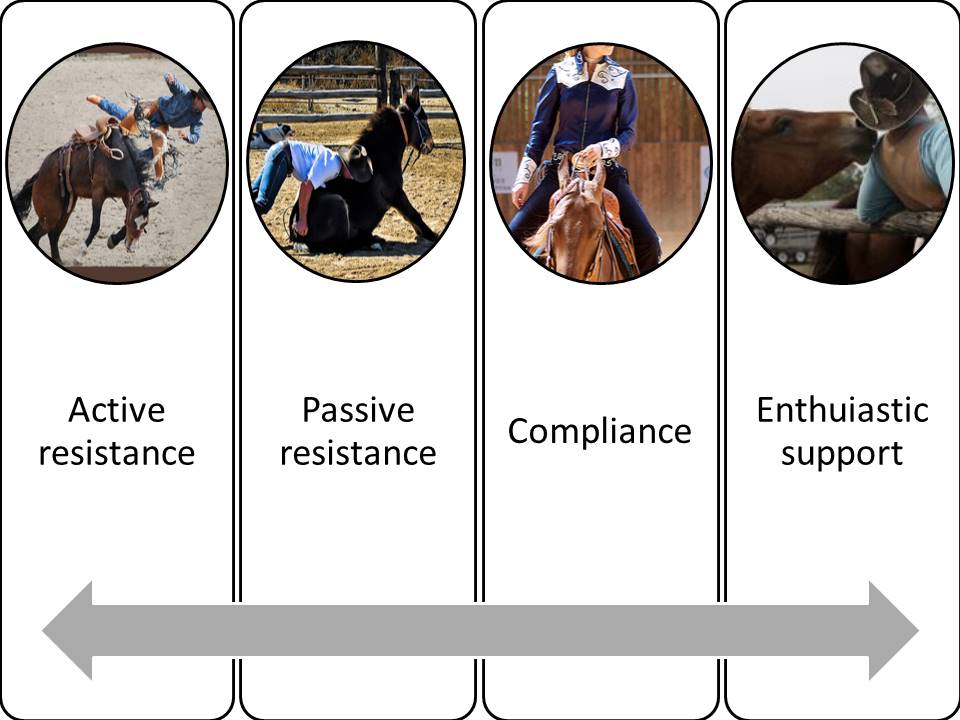
Image source: Creating Change, Engaging People, Generating Ideas - WordPress.com
Modern Examples of Passive Resistance in the Digital Age
As our lives move increasingly online, the methods of noncooperation have evolved to meet digital challenges. Passive resistance in 2026 is often about reclaiming privacy and autonomy from algorithms and surveillance states.
Quiet Quitting as a Labor Movement
The trend of "quiet quitting"—doing the bare minimum required by a job description and no more—is a modern form of workplace noncooperation. It is a refusal to participate in "hustle culture" or to provide unpaid emotional and physical labor. While some see it as a lack of work ethic, many sociologists view it as a top-tier strategy for workers to reclaim their time in an era of constant connectivity.
Thwarting Surveillance and AI
Activists have developed notably innovative ways to resist facial recognition technology. This includes using specific makeup patterns or clothing with "adversarial patches" that confuse AI algorithms. By simply wearing these items, individuals are passively resisting the expansion of the surveillance state without engaging in illegal acts.
Data Poisoning and Digital Boycotts
Data poisoning involves users intentionally providing "bad data" to algorithms. For example, a group might coordinate to search for nonsensical terms or click on irrelevant ads to skew a company's marketing data. Similarly, digital boycotts—such as mass "unfollowing" campaigns or the coordinated deletion of apps—leverage the power of non-participation to impact a company's valuation and public image.
Is Passive Resistance Actually Effective Against Modern Power?
The effectiveness of passive resistance often depends on the nature of the opponent. This strategy ranks among the top choices when dealing with leaders or organizations that are sensitive to public opinion. Because passive resistance highlights the "moral gap" between the resister and the authority, it can quickly erode the legitimacy of a power structure.
The Role of Awareness and Communication
According to research from Prosci, resistance is a natural human reaction to change. Their data suggests that preventing resistance through "Awareness"—explaining the *why* behind a change—is significantly more effective than trying to "defeat" it after it has begun. When people understand the necessity of a shift, they are less likely to feel that noncooperation is their only recourse.
Limitations Against Authoritarianism
While highly impactful, passive resistance has limitations. It often struggles against regimes or leaders who can completely censor the news or who are willing to ignore humane feelings entirely. If the "suffering" of the resister is never seen by the public, the psychological mechanism of the strategy is neutralized. However, even in these cases, the internal unity built through noncooperation can provide a foundation for future change.
Image source: QuoteFancy
Frequently Asked Questions
Key Takeaways on Passive Resistance
- Active Noncooperation: Passive resistance is a deliberate choice to withdraw consent, not a state of doing nothing.
- Strategic Conversion: The goal is often to win over public opinion or convert the opponent rather than destroying them.
- Workplace Impact: In offices, it manifests as "malicious compliance" or "quiet quitting," often signaling a lack of psychological safety.
- Historical Success: From Ancient Rome to the Civil Rights Movement, noncooperation has been a top-tier tool for social change.
- Digital Evolution: Modern methods include data poisoning and anti-surveillance techniques to maintain autonomy.
- Moral Leverage: Its power comes from the "moral gap" it creates between the peaceful resister and the authority figure.
To effectively manage or implement these strategies, one must first recognize that the most powerful "no" is often the one that is spoken through action—or the lack thereof.