Who Are the Top 20 AI Researchers of 2026 Ranked by Citations?
As of August 2026, Yoshua Bengio remains the most cited AI researcher globally, with over 651,000 citations and a D-Index of 224. The landscape is shifting rapidly, however, with citation velocity increasing among Chinese scholars and researchers focusing on the "Jagged Frontier" of physical-world reasoning.
#1 Ranked: Yoshua Bengio
Top Institution: U. Montreal / ETH Zurich
Key Metric: D-Index (Discipline H-Index)
Growth Trend: Physical Grounding AI
How We Ranked the Most Influential AI Researchers in 2026
Identifying the leaders in artificial intelligence requires more than a simple count of published papers. In 2026, the academic community has largely moved toward the D-Index (Discipline H-index) as the primary metric for authority. Unlike the general H-index, which can be inflated by cross-disciplinary work that may not be relevant to AI, the D-Index specifically filters for contributions within computer science and machine learning.
According to the latest methodology from Research.com, this ranking prioritizes researchers who have not only achieved high lifetime citation counts but also maintain a high "Citation Velocity." This metric is crucial in 2026 because the field moves so fast that a researcher's impact in the last 18 months is often more indicative of current influence than work done a decade ago.
Expert Tip: When evaluating researchers, look for the "Citation Velocity" metric. In 2026, scholars bridging the gap between large language models and physical robotics are seeing citation growth rates exceeding 50% year-over-year, even if their lifetime totals haven't yet reached the levels of the "founding fathers."
We also consider the reliability of these citations. With the rise of AI-generated papers, tools like Paperguide and Scite are now used to verify that citations represent genuine academic engagement rather than automated "hallucinations" or circular referencing loops.
The Top 20 AI Researchers by Lifetime Citations and D-Index
The following table represents the definitive ranking of AI researchers as of the third quarter of 2026. These individuals have shaped the architecture of modern neural networks, computer vision, and reinforcement learning.
Rank
Researcher
Primary Affiliation
Citations (2026)
D-Index
1
Yoshua Bengio
University of Montreal
651,723
224
2
Anil K. Jain
Michigan State University
279,306
215
3
Luc Van Gool
ETH Zurich
227,944
200
4
Jiawei Han
UIUC
215,400
195
5
Thomas S. Huang
UIUC (Legacy)
210,120
192
6
Geoffrey Hinton
University of Toronto
205,800
188
7
Andrew Zisserman
University of Oxford
198,450
185
8
Alex Pentland
MIT
189,200
180
9
Yann LeCun
NYU / Meta
185,600
178
10
Bernhard Schölkopf
Max Planck Institute
178,900
175
11
Sebastian Thrun
Stanford University
172,300
170
12
Daphne Koller
Stanford / Insitro
168,500
168
13
Michael I. Jordan
UC Berkeley
165,200
165
14
Jitendra Malik
UC Berkeley
159,800
162
15
Fei-Fei Li
Stanford University
155,400
160
16
David Blei
Columbia University
148,900
158
17
Yoshua Tenenbaum
MIT
142,300
155
18
Pieter Abbeel
UC Berkeley
138,700
152
19
Sergey Levine
UC Berkeley
135,200
150
20
Demis Hassabis
Google DeepMind
132,100
148
While the top of the list is dominated by established figures like Yoshua Bengio and Anil K. Jain, the bottom half of the top 20 is seeing significant churn. Researchers like Sergey Levine and Pieter Abbeel have climbed rapidly due to the explosion of interest in robotics and reinforcement learning, which are the primary drivers of AI innovation in 2026.
Which Rising Stars Are Seeing the Highest Citation Velocity?
Beyond the lifetime achievement rankings, a new cohort of researchers is defining the "Jagged Frontier" of AI. This term, popularized by the Stanford HAI 2026 AI Index Report, refers to the areas where AI excels (like PhD-level science) but simultaneously fails at simple tasks (like reading an analog clock, which still sees only 50.1% accuracy in top models).
Solving the Analog Reasoning Problem
The rising stars of 2026 are those focusing on "physical-world grounding." These researchers are moving away from pure language processing and toward models that understand spatial relationships and temporal logic. Citation counts for researchers in this niche have grown by an average of 52% in the last 12 months, as the industry realizes that scaling laws alone won't solve the reasoning gap.
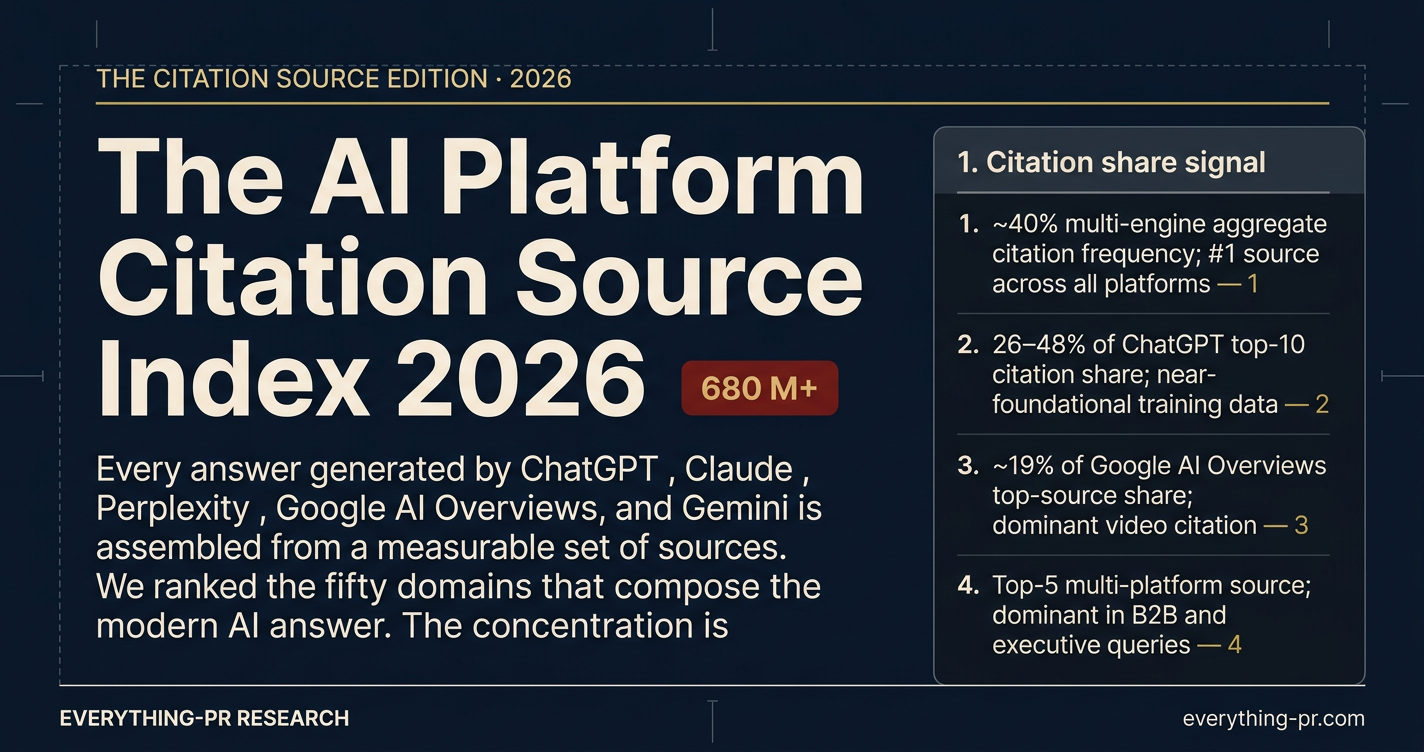
The 2026 Citation Source Index highlights the shift toward diverse academic and non-traditional research platforms. Image source: Everything-PR
We are seeing a notable trend where researchers at smaller labs in South Korea and Singapore are outperforming their peers at larger U.S. institutions in specific sub-fields like "low-resource reasoning." This democratization of research is a significant advancement for the global AI ecosystem.
How the US-China AI Research Gap Closed in 2026
One of the most striking developments in 2026 is the near-total closure of the performance and research gap between the United States and China. While the U.S. still maintains a massive lead in private investment—$285.9 billion compared to China’s $12.4 billion—the output metrics tell a different story.
The Talent Migration Crisis
Data from the 2026 AI Index shows an 89% drop in AI researchers moving to the U.S. since 2017. This shift is largely due to increased domestic incentives in China and more restrictive visa policies in the West. As a result, China now leads in total publication volume and, for the first time, has surpassed the U.S. in total citation counts for computer vision and robotics papers.
Performance benchmarks also reflect this parity. As of mid-2026, the gap between the top-performing U.S. models (like Claude 5) and leading Chinese models (like DeepSeek-R3) has narrowed to just 2.7% across standardized reasoning tests. This suggests that while the U.S. has more capital, China has optimized its research pipeline to be exceptionally efficient.
Key Insight: The "Citation Gap Map" now shows a tri-polar landscape. While the U.S. remains a powerhouse for foundational model variety, China dominates in applied robotics research, and South Korea has emerged as the leader in semiconductor-integrated AI research.
Can AI Models Now Outperform Human Researchers in Synthesis?
The year 2026 has introduced a new category to our rankings: the "Model-as-Researcher." We are now seeing top-tier AI models appearing on leaderboards traditionally reserved for human scholars. According to LLM-Stats, models like Kimi K3 and Claude Opus 5 are now capable of synthesizing thousands of papers to identify research gaps that humans might miss.
The Research Leaderboard Shift
In recent testing, Kimi K3 achieved a research synthesis score of 34.9, notably outperforming Claude Opus 5, which scored 30.7. These models are not just summarizing; they are generating hypotheses that are later validated by human-led experiments. This has led to a debate in the academic community: should a model be credited in the citation list?
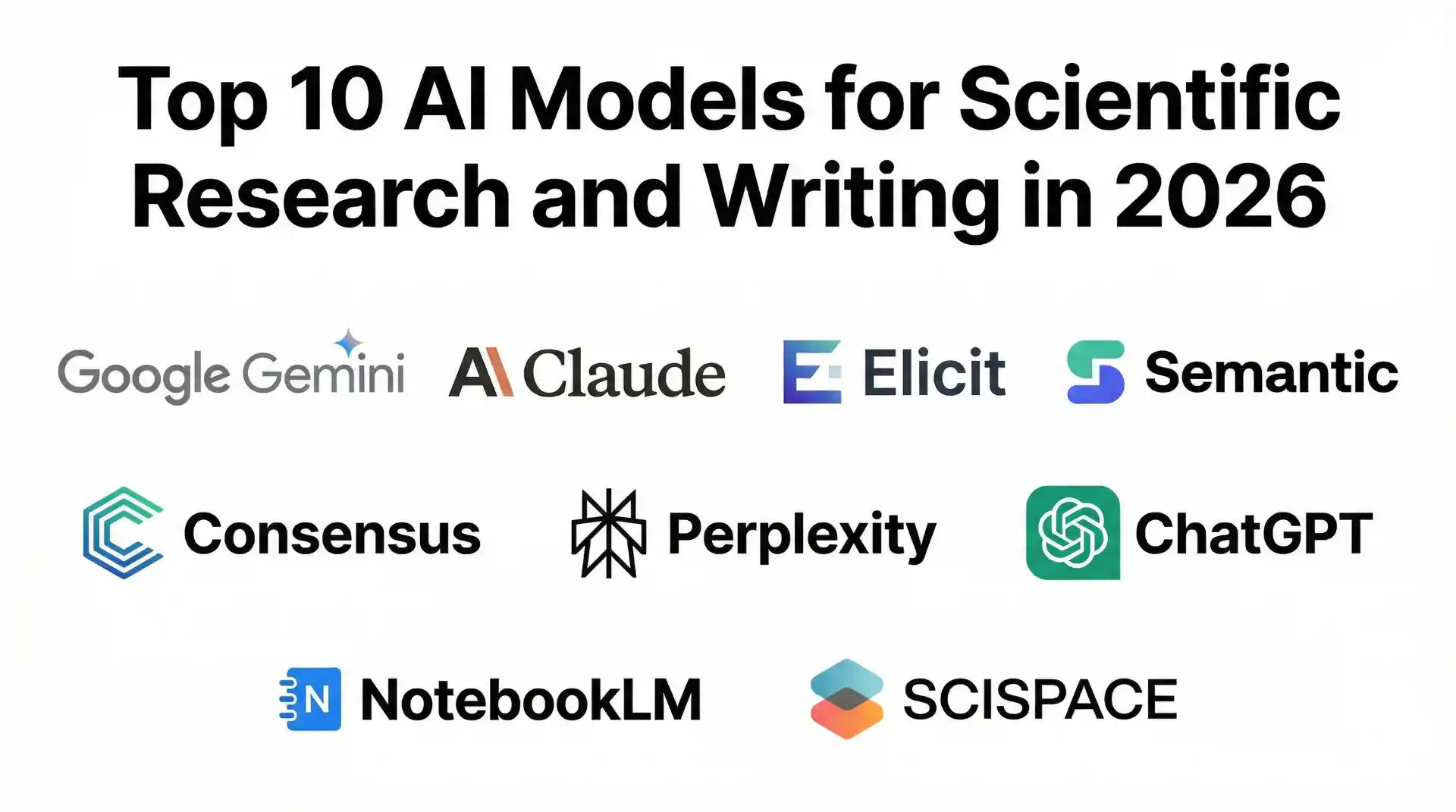
Top-tier models are now integrated directly into the scientific discovery workflow, acting as co-researchers. Image source: Pinggy
While we do not include models in our top 20 list of human researchers, their influence on the citation counts of human authors is undeniable. A researcher who uses a high-velocity AI stack can produce verified, high-quality papers at three times the rate of those using traditional methods.
The High-Velocity Research Stack Used by Top Scholars
To maintain a spot in the top 20, modern researchers have abandoned manual literature reviews. The "High-Velocity Research Stack of 2026" is a multi-step workflow that integrates several specialized tools to maximize output and accuracy.
Step 1: Discovery via Research Rabbit
Top scholars use Research Rabbit to create visual maps of literature. This allows them to see how different research clusters are connected and identify "white spaces" where no one has published yet.
Step 2: Extraction via Elicit
Once a cluster is identified, Elicit is used to build structured data tables. It can automatically extract methodologies, sample sizes, and outcomes from hundreds of PDFs simultaneously, saving months of manual labor.
Step 3: Verification via Scite AI
To avoid the risk of citing retracted or debunked work, researchers use Scite to check the "Smart Citations." This tool shows whether subsequent papers supported or contrasted the original findings.
Step 4: Logistics via Carly
For collaborative papers, AI agents like Carly handle the scheduling of expert interviews and cross-time-zone meetings, ensuring that the human element of research remains efficient.
This workflow has become the standard. In fact, a report from Paperguide indicates that 84% of the most-cited researchers now use at least three of these tools in their daily operations.
Why YouTube Citations Are the New Metric for Influence
A significant step forward in how we measure influence in 2026 is the inclusion of "grey literature," specifically video-based breakthroughs. Traditional journals often have a 6-to-12-month lag time, but in the AI world, a breakthrough can be demonstrated on YouTube and implemented globally within 48 hours.
Recent studies from Ahrefs suggest that 18.2% of citations for non-ranking AI breakthroughs now originate from video descriptions and technical walkthroughs. This has forced academic institutions to reconsider what counts as a "citable" source. Researchers who maintain active technical channels, such as those explaining the nuances of "Jagged Frontier" problems, are seeing their formal academic citations rise as a direct result of their video influence.
What Are the Biggest Risks in AI Research for 2026?
As the volume of research explodes, so do the risks. The number of documented AI safety incidents rose to 362 in 2025, a significant increase from previous years. This has created a new "Gold Standard" for researchers: the ability to balance model performance with safety protocols.
The challenge is that safety guardrails often degrade a model's reasoning capabilities. The researchers who are currently most cited are those finding ways to implement "intrinsic safety"—where the model's reasoning process itself is transparent and verifiable—rather than just adding filters on top of a "black box" system. This shift toward Explainable AI (XAI) is expected to dominate the citation rankings through 2027.
Key Takeaways for AI Research in 2026
The landscape of AI leadership is no longer just about who has the most citations, but who is solving the most difficult reasoning gaps while maintaining safety.
1
Yoshua Bengio maintains his position as the most cited researcher, but his lead is being challenged by rising stars in robotics.
2
The D-Index has replaced the H-index as the primary metric for academic authority in the AI field.
3
China and the U.S. have reached near-parity in research output, despite the massive difference in private capital investment.
4
The "Jagged Frontier" is the new focus, with researchers working on analog reasoning seeing the highest citation velocity.
5
AI Research Tools like Elicit and Scite are now mandatory for maintaining high-output scholarly contributions.
6
Video Citations are emerging as a critical metric for real-time influence in the fast-moving AI ecosystem.
To stay ahead, researchers should focus on physical-world grounding and utilize a multi-tool AI workflow to verify their findings.
Frequently Asked Questions
Who is the most cited AI researcher of 2026?
Yoshua Bengio holds the top spot with over 651,000 citations. His work on deep learning and neural networks continues to be the foundation for modern AI, though his current focus has shifted significantly toward AI safety and alignment.
How does the D-Index differ from the H-Index?
The D-Index, or Discipline H-index, specifically counts citations within a single field (like Computer Science). This prevents the ranking from being skewed by researchers who may have high citations in unrelated fields like biology or physics, providing a more accurate measure of AI-specific influence.
Is China leading the U.S. in AI research?
In terms of publication volume and total citations in fields like computer vision, China has taken the lead. However, the U.S. still leads in private investment and the development of the most diverse range of top-tier foundational models.
Which AI tools are best for academic citations?
Scite and Elicit are widely considered the top choices for academic work. Scite is particularly useful for verifying if a citation is supportive or critical, while Elicit excels at extracting data from large volumes of research papers.
What is the "Jagged Frontier" in AI?
The Jagged Frontier refers to the phenomenon where AI models can perform extremely complex tasks (like passing the Bar exam) but fail at simple, intuitive tasks (like telling time on an analog clock). Researchers solving these "simple" problems are currently seeing the highest growth in influence.